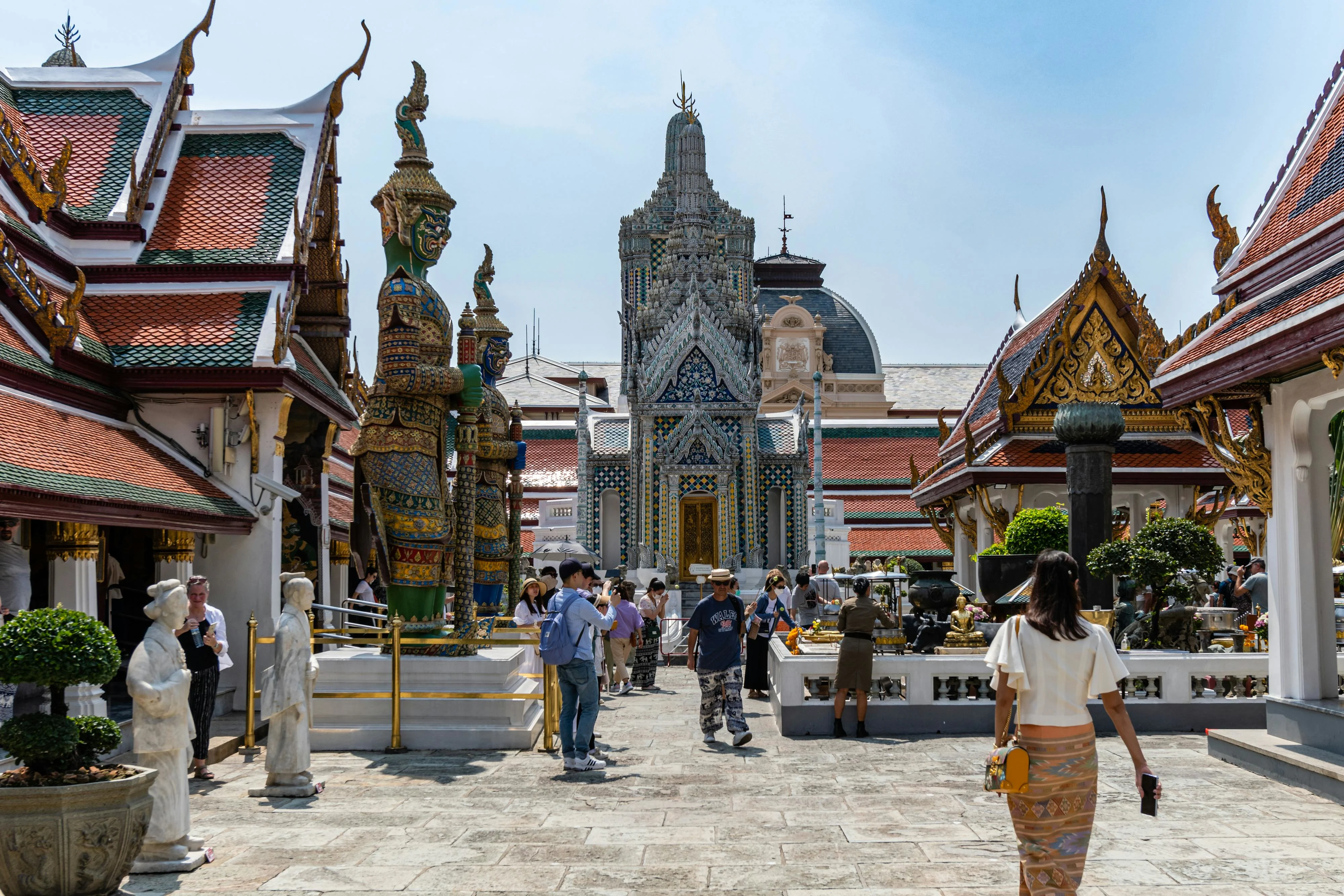
Here's the fully updated blog with every country listed:
Thailand Visa Exemption 2026: Which Countries Get 60 Days
Thailand offers automatic visa-free entry to 93 countries. For most of them, that meant 60 days from July 2024 onward. On 19 May 2026, the Thai Cabinet voted to revert the standard exemption back to 30 days. The change is not yet in force and requires Royal Gazette publication before it takes effect. Verify the current status at mfa.go.th before booking any trip longer than 30 days.
What the Visa Exemption Covers
The visa exemption is exactly what it says: no application, no embassy visit, no fee. You arrive at any Thai border checkpoint, your passport gets stamped, and your stay begins. The exemption covers tourism only and does not authorise work, study, or long-term residency.
Even with a valid exemption, the TDAC (Thailand Digital Arrival Card) is now mandatory for every foreign national entering Thailand. It replaced the old paper TM6 arrival card in May 2025. Complete it at tdac.immigration.go.th within 72 hours before arrival. Missing it creates delays at the border.
Who Gets What: Full Country List
90 Days — Bilateral Agreement
Five countries hold separate bilateral agreements giving 90 days for ordinary passport holders.
Country |
|---|
Argentina |
Brazil |
Chile |
Peru |
South Korea (Republic of Korea) |
60 Days — Visa Exemption (Currently Under Review)
The following 93 countries and territories are entitled to visa-free entry for up to 60 days for tourism purposes. This is the list currently under review for reversion to 30 days following the May 2026 Cabinet decision. The change requires Royal Gazette publication before taking effect. All entries made before the effective date remain valid at 60 days.
# | Country | # | Country | # | Country |
|---|---|---|---|---|---|
1 | Albania | 33 | Iceland | 65 | Poland |
2 | Andorra | 34 | India | 66 | Portugal |
3 | Argentina | 35 | Indonesia | 67 | Qatar |
4 | Australia | 36 | Ireland | 68 | Romania |
5 | Austria | 37 | Israel | 69 | Russia |
6 | Bahrain | 38 | Italy | 70 | San Marino |
7 | Belgium | 39 | Japan | 71 | Saudi Arabia |
8 | Bhutan | 40 | Jordan | 72 | Singapore |
9 | Brazil | 41 | Kazakhstan | 73 | Slovakia |
10 | Brunei | 42 | Kosovo | 74 | Slovenia |
11 | Bulgaria | 43 | Kuwait | 75 | South Africa |
12 | Cambodia | 44 | Laos | 76 | South Korea |
13 | Canada | 45 | Latvia | 77 | Spain |
14 | Chile | 46 | Liechtenstein | 78 | Sweden |
15 | China | 47 | Lithuania | 79 | Switzerland |
16 | Croatia | 48 | Luxembourg | 80 | Taiwan |
17 | Cyprus | 49 | Macau SAR | 81 | Timor-Leste |
18 | Czech Republic | 50 | Malaysia | 82 | Tonga |
19 | Denmark | 51 | Malta | 83 | Trinidad and Tobago |
20 | Dominican Republic | 52 | Mexico | 84 | Türkiye |
21 | Ecuador | 53 | Monaco | 85 | UAE |
22 | Estonia | 54 | Mongolia | 86 | Ukraine |
23 | Fiji | 55 | Montenegro | 87 | United Kingdom |
24 | Finland | 56 | Myanmar | 88 | United States |
25 | France | 57 | Netherlands | 89 | Vietnam |
26 | Georgia | 58 | New Zealand | 90 | Hong Kong SAR |
27 | Germany | 59 | North Macedonia | 91 | Papua New Guinea |
28 | Greece | 60 | Norway | 92 | Panama |
29 | Hungary | 61 | Oman | 93 | Peru |
30 | Iceland | 62 | Panama | ||
31 | India | 63 | Papua New Guinea | ||
32 | Indonesia | 64 | Philippines |
Always verify the current list at the official Thai Ministry of Foreign Affairs website at mfa.go.th before booking. The list is updated periodically and what applied last year may not apply now.
Visa on Arrival — 15 Days
Citizens of the following 31 countries may apply for a Visa on Arrival at designated immigration checkpoints only. The application fee is 2,000 baht. The Visa on Arrival is not available at all border crossings and is not the same as the visa exemption.
# | Country | # | Country |
|---|---|---|---|
1 | Armenia | 17 | Namibia |
2 | Belarus | 18 | Nauru |
3 | Bolivia | 19 | Pakistan |
4 | Burkina Faso | 20 | Papua New Guinea |
5 | Benin | 21 | Paraguay |
6 | Bhutan | 22 | Senegal |
7 | Bolivia | 23 | Serbia |
8 | China (additional channels) | 24 | Sri Lanka |
9 | Colombia | 25 | Taiwan (additional channels) |
10 | Costa Rica | 26 | Tunisia |
11 | El Salvador | 27 | Uzbekistan |
12 | Ethiopia | 28 | Vanuatu |
13 | Guatemala | 29 | Venezuela |
14 | Honduras | 30 | Zimbabwe |
15 | Kyrgyzstan | 31 | Others as listed by MFA |
16 | Morocco |
The Visa on Arrival list and designated checkpoints are confirmed at mfa.go.th and subject to change.
The May 2026 Update: What Is Changing
The Thai Cabinet approved reverting the standard visa exemption from 60 days to 30 days on 19 May 2026. The decision cited concerns about visitors using the extended exemption for work, low-spending trips, and activities that undercut local operators. The change affects the 93 countries currently on the 60-day list, reverting them to the pre-July 2024 framework.
The new rules take effect 15 days after Royal Gazette publication. No Royal Gazette date had been announced as of the time of writing. Current trips and already-issued entry stamps are not affected. Only entries made after the effective date fall under the new 30-day limit.
The five countries with 90-day bilateral agreements (Argentina, Brazil, Chile, Peru, South Korea) are not affected by this change. Their 90-day allowance comes from a separate bilateral treaty rather than the general exemption scheme.
The 30-day extension at immigration for 1,900 baht remains available regardless of the change. The TDAC requirement is also unchanged.
The Land Border Limit
The visa exemption has one key restriction for frequent visitors: land border crossings are capped at 2 entries per calendar year. Air entries have no annual limit. This rule has been in place since 2014 and is actively enforced at busy crossings like Mae Sai and Poipet.
If you enter by air, you can use the exemption as many times as you want in a year. The practical result is that frequent visitors are significantly better off flying in and out than doing land border runs.
Extending Your Stay
A single 30-day extension is available at any immigration office for 1,900 baht. Bring your passport, a completed TM.7 form, a 4x6cm photo, and a copy of your bio page and current entry stamp. Most offices process same-day. Busy offices like Chaeng Wattana in Bangkok run 2 to 3 hours.
You cannot extend a second time on a visa exemption entry. After the extension, you must leave Thailand. If you need more time, the only options are leaving and re-entering on a new exemption or applying for a long-stay visa before your next entry.
Overstay Consequences
Overstaying carries a fine of 500 baht per day up to a maximum of 20,000 baht. Beyond the fine, bans apply at specific thresholds.
Overstay Duration | Ban Length |
|---|---|
Up to 89 days | Fine only (500 baht/day, max 20,000 baht) |
90 days to 1 year | 1-year entry ban |
1 year to 3 years | 3-year entry ban |
3 years to 5 years | 5-year entry ban |
5 years or more | 10-year entry ban |
Thai immigration checks departure dates when you exit. Paying the fine at the departure airport allows you to leave without further consequence, provided the overstay is below the ban thresholds. Do not assume a short overstay will go unnoticed at a land crossing.
What to Have at the Border
Thai immigration can ask for proof of onward travel and proof of funds even with a valid exemption. The official guideline is 10,000 baht per person or 20,000 baht per family in accessible funds. Cash checks are rare at major airports and more common at land crossings.
Your passport must be valid for at least 6 months beyond your intended stay. Passports with less than 6 months of validity are technically grounds for denial. If your passport is close to expiry, renew it before traveling.
Official Resources
All visa exemption information is maintained by the Thai Ministry of Foreign Affairs and the Thai Immigration Bureau. Always verify before booking.
Thai Ministry of Foreign Affairs: mfa.go.th
Thai Immigration Bureau: immigration.go.th
TDAC (Digital Arrival Card): tdac.immigration.go.th
Where to Go from Here
If 30 days is not enough under the new framework, the Thailand tourist visa guide covers the SETV and how to get 60 days guaranteed on a visa applied for before arrival. For stays beyond 90 days, the Thailand DTV visa guide covers the 5-year option for remote workers and freelancers. The full picture on every long-stay option is in the Thailand visa guide.