Best City for Retirees in Thailand 2026: Where to Actually Settle
Most retirees research Thailand for months before arriving and then make their city choice based on which place felt nicest during a holiday. That is a reasonable start and an unreliable finish.
The variables that actually determine retirement quality are hospital access, monthly cost, climate, and whether the social environment matches how you spend your days. Four cities account for the vast majority of foreign retirees in Thailand: Chiang Mai, Bangkok, Hua Hin, and Phuket. Each one serves a different kind of retiree.
The Healthcare Proximity Test
Before anything else, run this calculation honestly. Imagine waking at 3am with severe chest pain. How long does it take to reach a hospital with a cardiac unit?
In Bangkok: 15 to 20 minutes. In Chiang Mai: 15 to 20 minutes. In Hua Hin: 30 minutes to a local private hospital, or 3.5 hours to Bangkok's top hospitals. In Phuket: 20 minutes to Phuket International Hospital.
For retirees in good general health with no significant cardiac or neurological history, Hua Hin's access is sufficient. For retirees over 70 or managing known heart, kidney, or neurological conditions, proximity to Bangkok's or Chiang Mai's hospitals is not a comfort factor. It is a practical one. This single question resolves the city choice more cleanly than any lifestyle comparison.
City Comparison at a Glance
City | Monthly Cost | Hospital Access | Community | Climate Issue |
|---|---|---|---|---|
Chiang Mai | 45,000–65,000 baht | Good (Bangkok for complex) | Excellent | Burning season Jan–Mar |
Bangkok | 70,000–100,000 baht | Excellent | Large, dispersed | Moderate pollution |
Hua Hin | 45,000–65,000 baht | Basic (Bangkok for serious) | Retiree-focused | None significant |
Phuket | 60,000–90,000 baht | Good (international hospitals) | Large, diverse | None significant |
Chiang Mai: Best for Active Retirees
Chiang Mai has the most socially active expat community relative to its size of any Thai city. Regular meetups, expat clubs, volunteer opportunities, language classes, cooking schools, and a dense cafe culture make it genuinely easy to build a social life without effort. The Old City and Nimman are walkable for daily needs without a car, which matters more in retirement than most people anticipate before they arrive.
Monthly costs for a comfortable retirement run 45,000 to 65,000 baht. Bangkok Hospital Chiang Mai and Chiang Mai Ram handle most general and specialist needs competently. Complex conditions or major surgery require travelling to Bangkok, which is a 1.5-hour flight or an overnight train.
The burning season is the honest drawback. From January through March the AQI regularly exceeds 200, outdoor activity becomes inadvisable, and the social life that makes Chiang Mai appealing shifts indoors. Many retirees leave for 2 to 3 months and return in April. Budget for that from the start and Chiang Mai delivers on its reputation. For the full Bangkok versus Chiang Mai comparison, see Bangkok vs Chiang Mai for Expats.
Bangkok: Best Hospital Access in the Region
Bangkok is the only city in Thailand with world-class hospitals across multiple specialties. Bumrungrad in Sukhumvit, Bangkok Hospital, and Samitivej are consistently ranked among the best in Southeast Asia for international patients. Retirees managing complex chronic conditions, or those who want the reassurance of the best available care within 20 minutes, belong in Bangkok or close enough to reach it fast.
A comfortable Bangkok retirement runs 70,000 to 100,000 baht per month. The higher cost reflects accommodation, not a Bangkok premium on food or transport. The BTS Skytrain covers most of the city without needing a car. Neighbourhoods like Thonglor, Ari, and Silom have genuine community feel within the city's larger scale.
The trade-off is the anonymity. Bangkok is large and can feel impersonal, particularly for retirees coming from Chiang Mai's concentrated expat scene. Finding a social network takes more active effort. The reward is never having to make the calculation about whether you can afford the flight to get proper medical attention.
Hua Hin: Best for Beach Retirees Near Bangkok
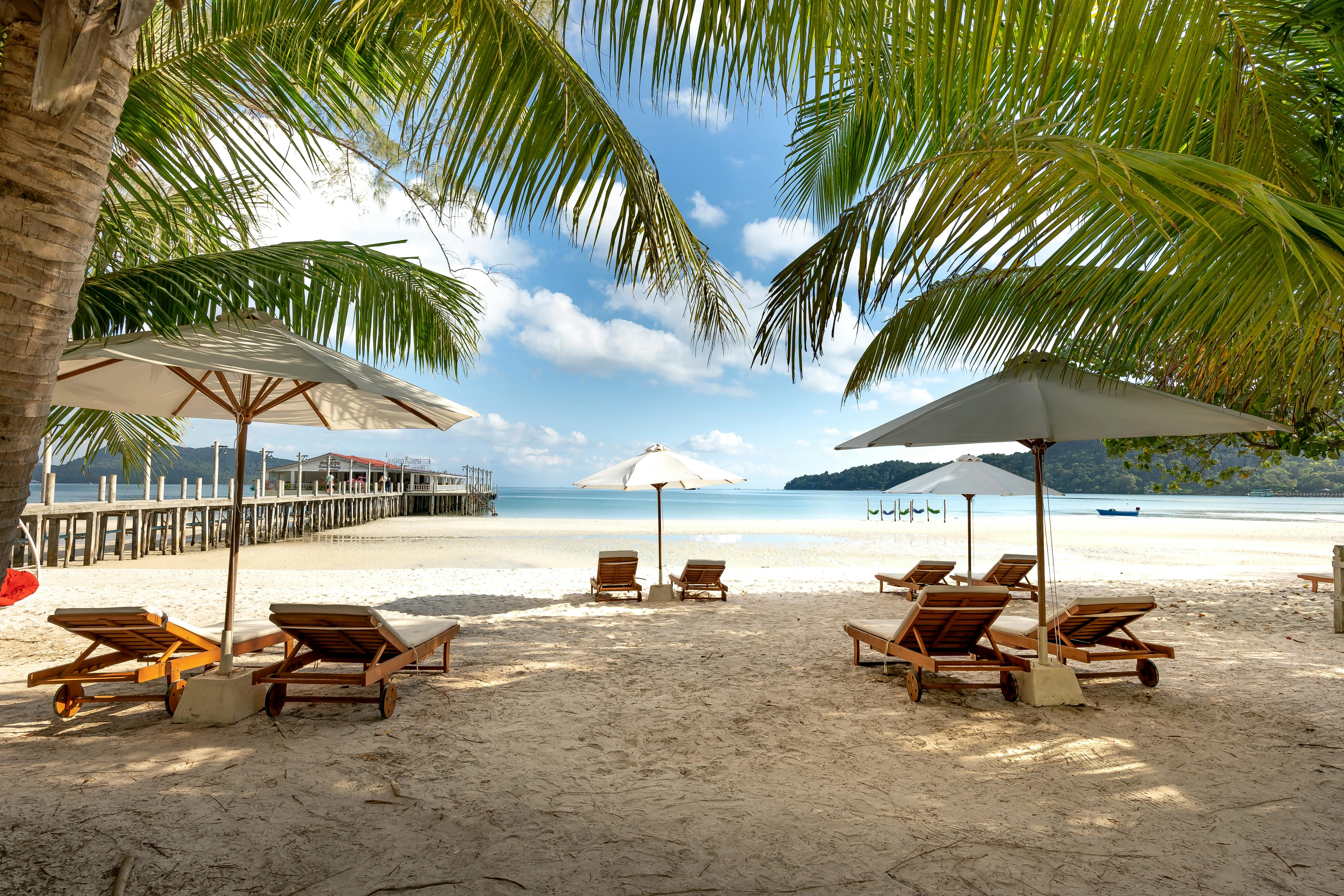
Hua Hin works exceptionally well for a specific retiree profile: someone who wants slow mornings, clean beaches, excellent golf, and a social life built around the expat community rather than the city itself. The European and Australian retirement community here is well-established and socially cohesive, centred on golf clubs, beach restaurants, and the Hua Hin Expats Club.
Monthly costs run 45,000 to 65,000 baht, matching Chiang Mai's price point with the beach lifestyle that Chiang Mai cannot offer. The 3.5-hour drive to Bangkok keeps specialist healthcare within practical reach for planned appointments. Routine and general specialist care at the local private hospitals covers most day-to-day needs.
The honest limitation is range. Hua Hin does not offer much if golf and beach relaxation are not central to how you spend your time. The social infrastructure is narrower than Chiang Mai's, and retirees who want cultural day trips, language classes, or a varied activity calendar will find it limited. For anyone whose retirement looks like slow mornings and tee times, it is hard to beat at this price point. For the full beach city comparison including Phuket and the islands, see Best Beach Cities for Expats in Thailand 2026.
Phuket: Best for Beach Lifestyle With Complete Infrastructure
Phuket costs more than Hua Hin and delivers more in return. International hospitals, a large international airport with direct flights to Bangkok, Singapore, and Europe, a significantly larger expat population, and a beach environment that stays liveable year-round make it the most complete beach retirement base in the country.
Monthly costs run 60,000 to 90,000 baht. Long-stay retirees concentrate in Rawai and Chalong in the south, away from Patong's tourist density. Phuket International Hospital and Bangkok Hospital Phuket handle serious cases without requiring the flight to the capital in most situations. Air quality is good year-round with none of the burning season problems that affect the north.
The seasonal tourism traffic in the north of the island is the main friction. The south sidesteps most of it. Retirees who choose their neighbourhood carefully get the beach lifestyle Hua Hin offers at a higher price but with meaningfully better hospital access and a larger, more diverse expat community.
The Second Most Important Question
After healthcare proximity, the second most useful question is this: what do you do when you are not reading, eating, or sleeping?
If the answer is golf, beach walks, and organised expat events, Hua Hin and Phuket serve that better than any other Thai city. If the answer is language classes, cooking courses, temple visits, and cultural day trips, Chiang Mai is the stronger fit. If the answer is access to the best available food, entertainment, and medical care without compromise on anything, Bangkok is the answer and the cost is the price of that.
Retirees who are genuinely unsure should spend 6 to 8 weeks in their shortlisted cities before committing to a lease. Both Chiang Mai and Hua Hin have active month-to-month rental markets that make trial periods practical without financial exposure.
Where to Go from Here
For families navigating Thailand retirement alongside visiting grandchildren and school considerations: Best City for Families in Thailand 2026.
For retirees considering smaller cities and towns beyond the four main options: Small Towns in Thailand Worth Living In.
For the full side-by-side of every major option in the country: Best Cities to Live in Thailand 2026.