Best Neighbourhoods in Chiang Mai for Long Stays
The hotel booking platforms will show you the same four or five Nimman properties every time. That is fine for a week. For a month or longer, the neighbourhood question matters far more than the hotel score.
Chiang Mai is a major hub for expats and digital nomads, offering a calm atmosphere, a strong international community, and numerous coworking spaces. What those descriptions skip is that Chiang Mai is not one neighbourhood. It is several very different places that happen to share a city name. Picking the wrong one means spending your whole stay commuting to the parts of the city you actually want to be in.
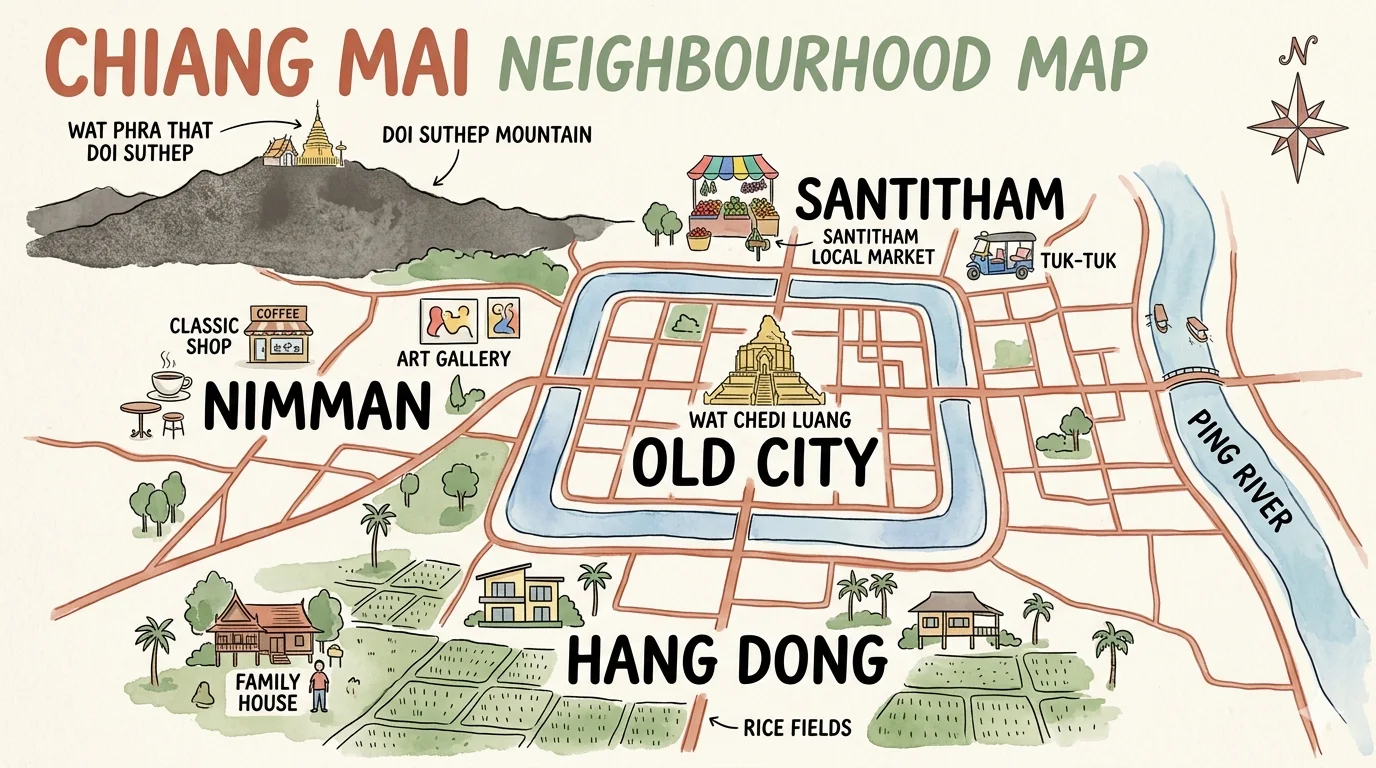
This guide covers four neighbourhoods in honest detail: Nimman, the Old City, Santitham, and Hang Dong. Each one suits a different type of stay, budget, and lifestyle. Pick based on what you are actually there to do.
For the full Chiang Mai picture including costs, hotels, and coworking, read the Chiang Mai Guide.
Quick comparison
Neighbourhood | Best for | Monthly rent (studio) | Scooter needed | WiFi quality |
|---|---|---|---|---|
Nimman | Nomads, short to mid stays | 10,000 to 20,000 baht | No | Excellent |
Old City | Culture stays, budget travellers | 8,000 to 15,000 baht | No | Variable |
Santitham | Long stays, budget expats | 5,000 to 10,000 baht | Yes | Good |
Hang Dong | Families, retirees, long-term | 15,000 to 40,000 baht | Yes | Good |
Nimman
Who it suits
Nimman is the default starting point for most long-stay visitors and it earns that status. From November to February, Chiang Mai's Nimman neighbourhood fills with young foreign freelancers, entrepreneurs, and remote workers who choose to spend their time here year after year. The infrastructure is built around them: coworking spaces on every soi, cafes with reliable WiFi on every corner, and modern condo buildings within walking distance of everything you need day to day.
Chiang Mai province is among the world's top destinations for digital nomads, and Nimman is the neighbourhood where most of that community is concentrated. Punspace, CAMP at Maya Mall, and a dozen other coworking options are all within a 15-minute walk of most Nimman buildings.
What it actually looks like
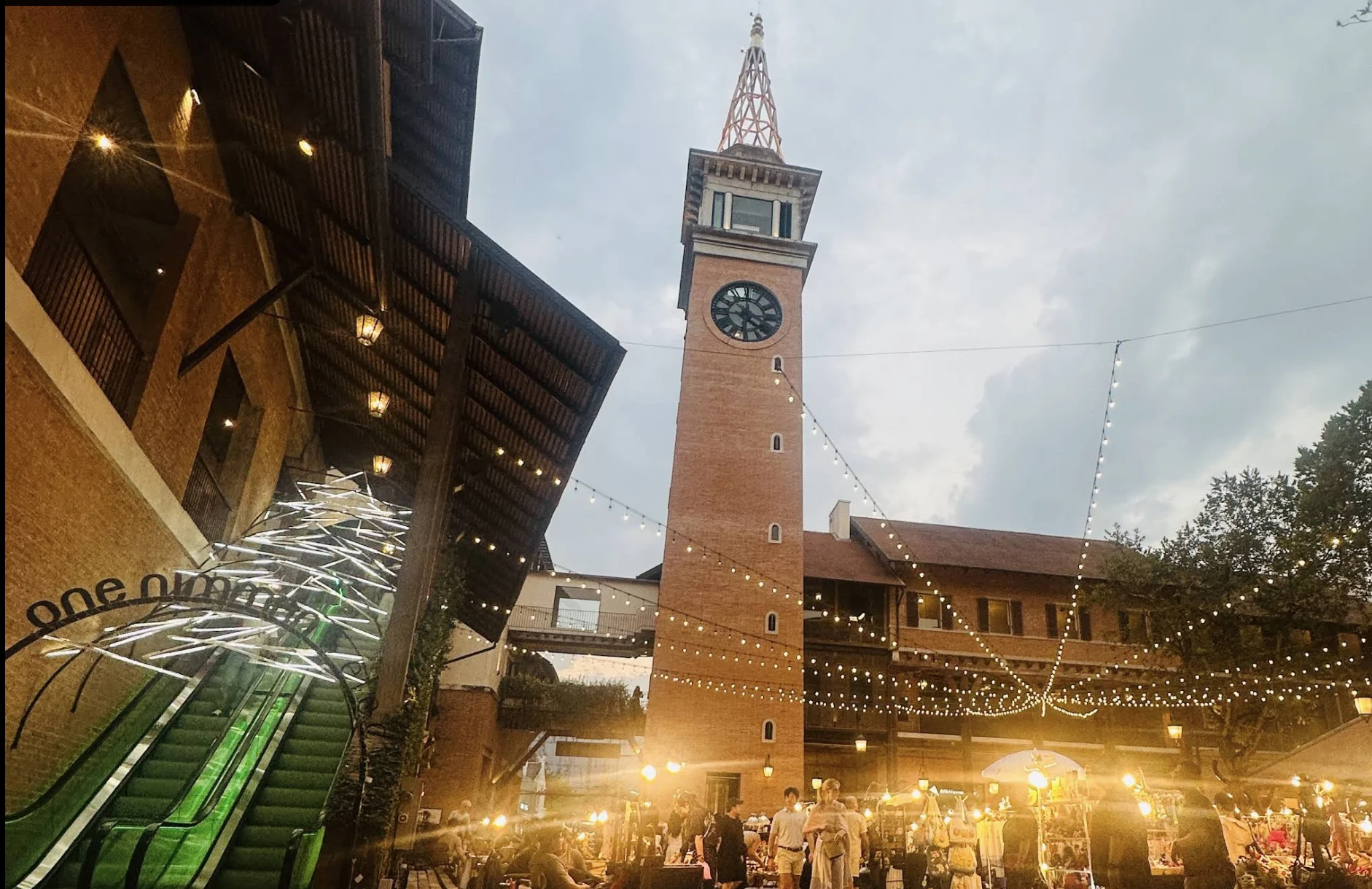
Nimman is walkable in a way that most of Chiang Mai is not. Maya Lifestyle Shopping Center and One Nimman are both on foot from the main residential sois, which means groceries, restaurants, pharmacies, and banks are all covered without a scooter. The streets are clean, the buildings are modern, and the area is well-lit at night.
The honest reality is that Nimman is the most international-feeling part of Chiang Mai. If you walked through it without knowing where you were, you could mistake it for a well-designed neighbourhood in any mid-sized Southeast Asian city. Locals live here but they are not the majority presence on the main sois.
The drawback
Nimman is the most expensive residential neighbourhood in the city. A brand-new luxury building in Nimman with top-notch facilities might have one-bedroom units starting closer to 18,000 to 20,000 baht per month. An older building in the same area might offer a one-bedroom for around 10,000 baht. For a furnished studio with pool and gym access in a modern building, budget 12,000 to 18,000 baht per month.
Nimman also absorbs burning season badly. Being surrounded by cafes and coworking spaces means nothing when the AQI hits 200 and you cannot comfortably walk outside. For the burning season picture, read the Chiang Mai Burning Season Guide.
Best for
Remote workers and nomads on stays of one to three months who want everything walkable, fast WiFi infrastructure, and a ready-made community without having to search for it.
Old City
Who it suits
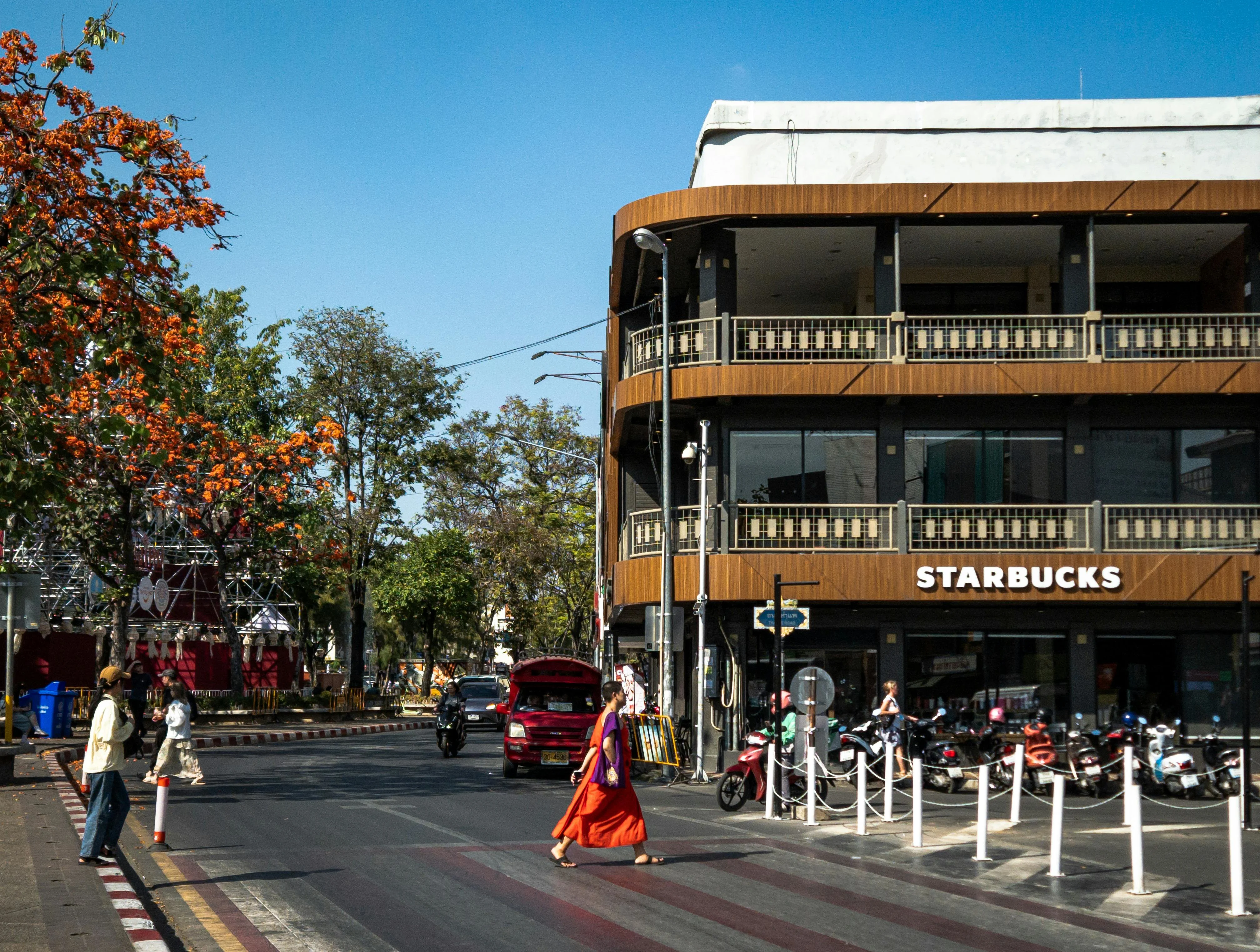
The Old City is built inside a square moat and holds most of Chiang Mai's temples, walking markets, and historic guesthouses. It suits visitors who are in Chiang Mai for the culture rather than the coworking scene: people who want Doi Suthep visible from the rooftop, Sunday Walking Street ten minutes on foot, and street food cheaper than anything Nimman offers.
It also suits people who want to feel like they are in Thailand rather than in an international expat neighbourhood. The Old City has more Thai residents, more traditional shophouses, and a pace that is noticeably slower than Nimman even during peak season.
What it actually looks like
The streets inside the moat are a mix of guesthouses, temples, small restaurants, and local businesses. Tuk-tuks park near the gates. Monks walk the streets at dawn. The Sunday Walking Street on Ratchadamnoen Road fills from afternoon and runs until late evening with food, craft, and live music.
WiFi infrastructure in the Old City is more variable than Nimman. Guesthouses and smaller apartment buildings run 30 to 60 Mbps on average. Some buildings are significantly slower. If you need reliable upload speeds for video calls, test the connection before committing to a longer stay.
The drawback
Coworking options are limited inside the moat. The nearest Punspace is near Tha Phae Gate on the eastern edge of the Old City, which is walkable from some locations and a Grab ride from others. CAMP at Maya Mall is a 10-minute Grab ride. For anything more than occasional remote work, the Old City requires planning your working infrastructure before you arrive.
Accommodation skews toward guesthouses and older apartment buildings rather than modern condos with pool and gym. That suits some stays and not others.
Best for
Short to medium stays of one to four weeks focused on culture, temples, and local food. Also suits retirees or independent travellers who want a slower pace and are not reliant on coworking infrastructure.
Santitham
Who it suits
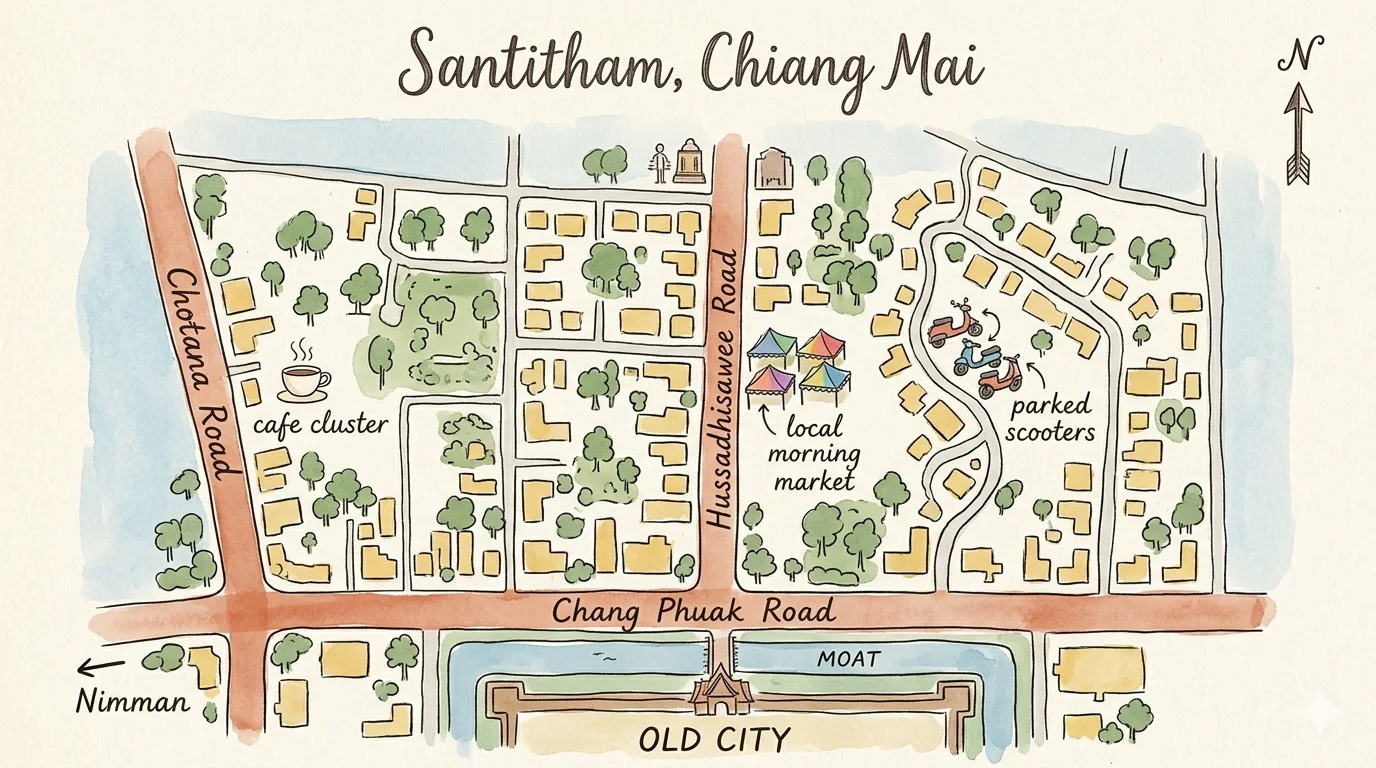
Santitham is the neighbourhood most long-term Chiang Mai residents end up in after their first stay in Nimman. It sits north of the Old City and southwest of Nimman, close enough to both to make either accessible by scooter or a short Grab ride.
Chiang Mai provides a great starting point for new nomads based on affordability. Santitham is where the affordability becomes real. Rents are significantly lower than Nimman for comparable space, the streets feel more local, and the daily rhythm is closer to how Thai residents actually live than anything you find in the more developed tourist zones.
What it actually looks like
Santitham has good cafes, a growing number of coworking-friendly spots, a daily market, and residential streets with actual Thai neighbours. It does not have Maya Mall. It does not have the density of international restaurants that Nimman does. What it has is a neighbourhood that feels like it belongs to the people who live in it rather than the people passing through.
The area around Santitham Road and the streets off Huay Kaew Road have seen the most growth in the last three years. New cafes and small restaurants continue to open. The building stock is older than Nimman but the gap is closing as newer condos come online.
The drawback
You need a scooter or Grab for most practical errands. There is no shopping mall within walking distance. The nearest coworking spaces require a 10 to 15 minute ride. For anyone who wants to be fully pedestrian and have everything within a five-minute walk, Santitham does not deliver.
Monthly rent for a furnished studio runs 5,000 to 10,000 baht, which is the strongest value proposition of any central neighbourhood in Chiang Mai. That price reflects both the location and the older building stock. Inspect units carefully before signing.
Best for
Stays of two months or longer for budget-conscious expats and nomads who have their working infrastructure sorted and want more city for less money. Also good for anyone who has done Nimman before and wants something that feels less like an expat enclave.
Hang Dong

Who it suits
Hang Dong sits south of the city along the road toward Doi Inthanon and the airport. It is almost entirely a residential area with a significant proportion of long-term foreign residents, particularly retirees and families who have moved to Chiang Mai permanently.
Hang Dong is a growing residential space for families and businesses looking for houses to rent in Chiang Mai. The housing stock here is fundamentally different from the rest of the city: standalone houses with gardens, private parking, and space that no condo in Nimman can match at the same price.
What it actually looks like
Hang Dong is suburban. There are no temples on the street corner and no night markets within walking distance. What it has is space, quiet, and a pace of life that most other Chiang Mai neighbourhoods do not offer at any price.
The international school cluster in the area makes Hang Dong the default choice for families with school-age children. The road infrastructure connects it to the city relatively quickly, though traffic on the Superhighway during peak hours adds time to any commute.
The drawback
A car or scooter is not optional in Hang Dong. It is a requirement. Every errand requires transport. The nearest coworking spaces are in Nimman, a 20 to 30 minute drive depending on traffic. For anyone working remotely and wanting to be close to the coworking scene or city amenities, Hang Dong requires a genuine commitment to the lifestyle it offers.
Monthly rents for houses run 15,000 to 40,000 baht depending on size, garden, and whether a pool is included. For a family who would pay the same for a small Nimman condo, the value proposition is obvious. For a solo worker who needs to be near Nimman infrastructure, it is a poor fit regardless of price.
Best for
Families with school-age children, retirees who prefer a residential lifestyle, and long-term residents who want a house rather than a condo and are comfortable being car-dependent.
How to choose
The decision is simpler than it looks once you are honest about your priorities.
Work from a room or coworking space daily, and need fast WiFi and short commutes. Nimman. Accept the premium and stop looking at alternatives.
Culture-first trip of one to four weeks, occasional remote work only. Old City. Book a guesthouse or small apartment with confirmed WiFi speed. Test it before committing.
Staying two months or more, budget matters, comfortable on a scooter. Santitham. The money saved monthly versus Nimman covers flights home.
Moving to Chiang Mai with a family or for retirement. Hang Dong. Everything else in the city is a compromise on space and lifestyle that Hang Dong does not make.
What the commute actually looks like
Worth knowing before you place yourself in the wrong neighbourhood based on rent alone.
Route | By scooter | By Grab | Approximate fare |
|---|---|---|---|
Santitham to Nimman | 10 to 15 min | 10 to 15 min | 50 to 80 baht |
Old City to Nimman | 10 min | 10 min | 50 to 70 baht |
Hang Dong to Nimman | 25 to 40 min | 25 to 40 min | 100 to 150 baht |
Old City to Santitham | 10 min | 10 min | 50 to 70 baht |
Grab pricing fluctuates during peak hours and rain. The figures above reflect normal conditions.
Booking tips
📍 Arrive before committing to a long rental. Spend three to five days in a hotel or short-stay apartment first. Walk the neighbourhood at different times of day before signing anything.
💰 Negotiate directly. The best monthly rates in every neighbourhood come from emailing building management directly. Portal prices are rack rates. Direct conversations get you the actual number.
📶 Test WiFi in the unit before signing. Run a speed test from inside the specific room. Building hallway speeds and in-room speeds are not always the same.
🔥 Factor in burning season. If your stay overlaps with February through April, ask buildings whether units have air purifiers. This matters most for the Old City and Santitham where building stock is older and sealing is less reliable.
For hotel options while you search for longer-term accommodation, read the Best Hotels in Chiang Mai Guide. For what monthly rental actually costs across each neighbourhood, read the Renting an Apartment in Chiang Mai Guide.
Where to go from here
If you are ready to look at rentals, the Renting an Apartment in Chiang Mai Guide covers current prices by building, what to check before signing, and how to negotiate a monthly rate.
For the full cost breakdown including utilities, food, and transport across each neighbourhood, read the Cost of Living in Chiang Mai Guide.