Chiang Mai Food Guide That Doesn't Send You to the Wrong Places
Most visitors spend their first meal in Chiang Mai eating pad thai from a tourist menu. That is a reasonable mistake once. Repeating it is harder to forgive when the city has one of the most specific and underrated regional food cultures in Southeast Asia.
Northern Thai food, also called Lanna cuisine, is not the same food you ate in Bangkok. The flavours are earthier, the spice profile is different, and most of the dishes do not travel well enough to be common outside the north. This guide covers what to order, what to skip, and where to find the food that actually represents the city.
If you are still figuring out which part of Chiang Mai to base yourself in, the neighbourhood guide breaks that down by area, lifestyle, and budget.
What makes Northern Thai food different
Lanna cuisine draws from centuries of trade routes connecting Thailand, Myanmar, Laos, and Yunnan province in southern China. That means fermented flavours, dried spices, and a reliance on fresh herbs that do not appear in central Thai cooking.
The biggest difference: Northern Thai food uses very little coconut milk compared to the south. Dishes lean on fermented ingredients, galangal, lemongrass, and dried chilis rather than coconut-based curry sauces. The one famous exception is khao soi, which uses coconut milk and happens to be the dish everyone arrives here to find.
Sticky rice is the staple starch. You will get a small basket of it with most dishes at local restaurants, and eating with your hands is standard. Order jasmine rice in a Lanna restaurant and you will get a politely confused look.
The dishes worth ordering
Khao Soi
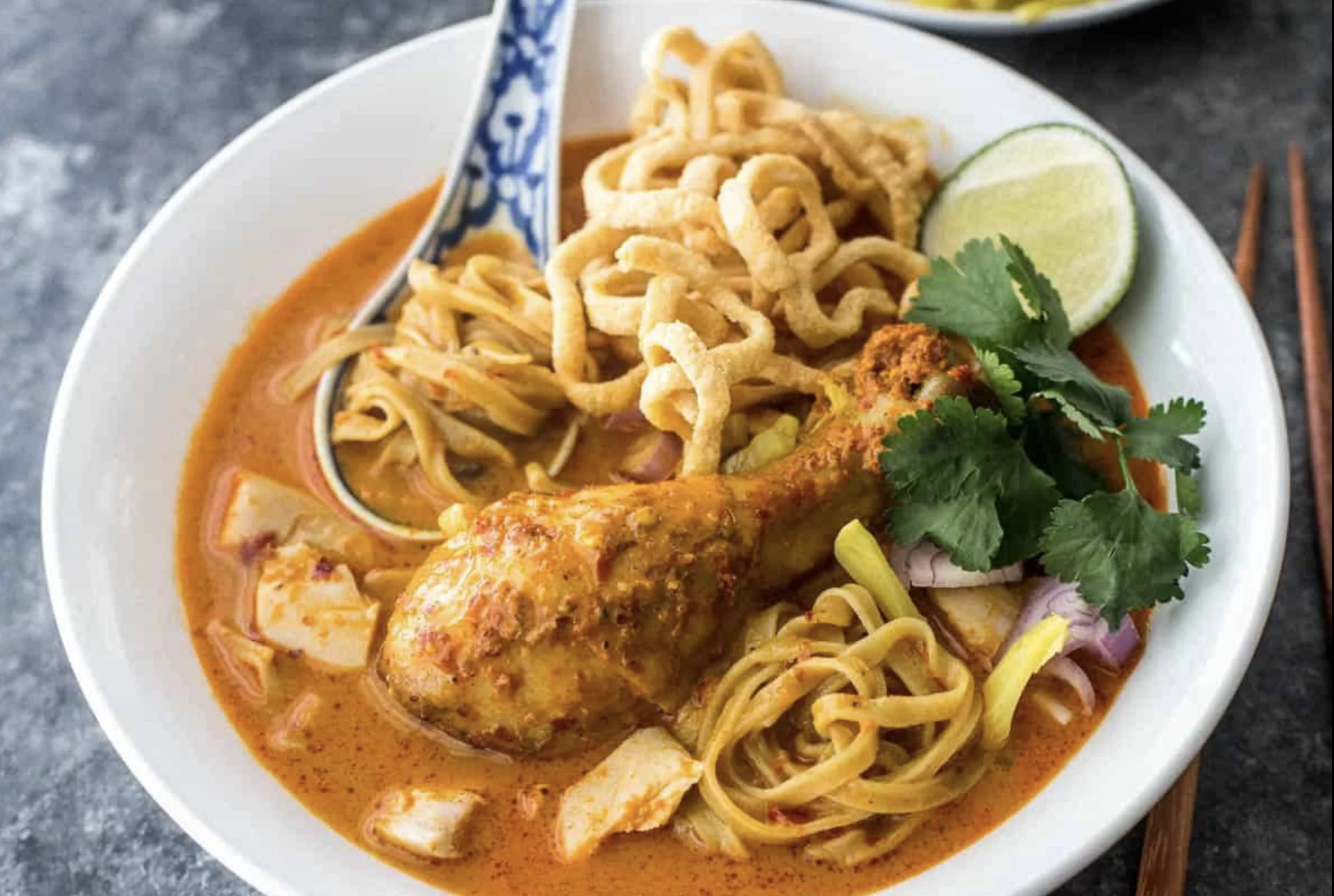
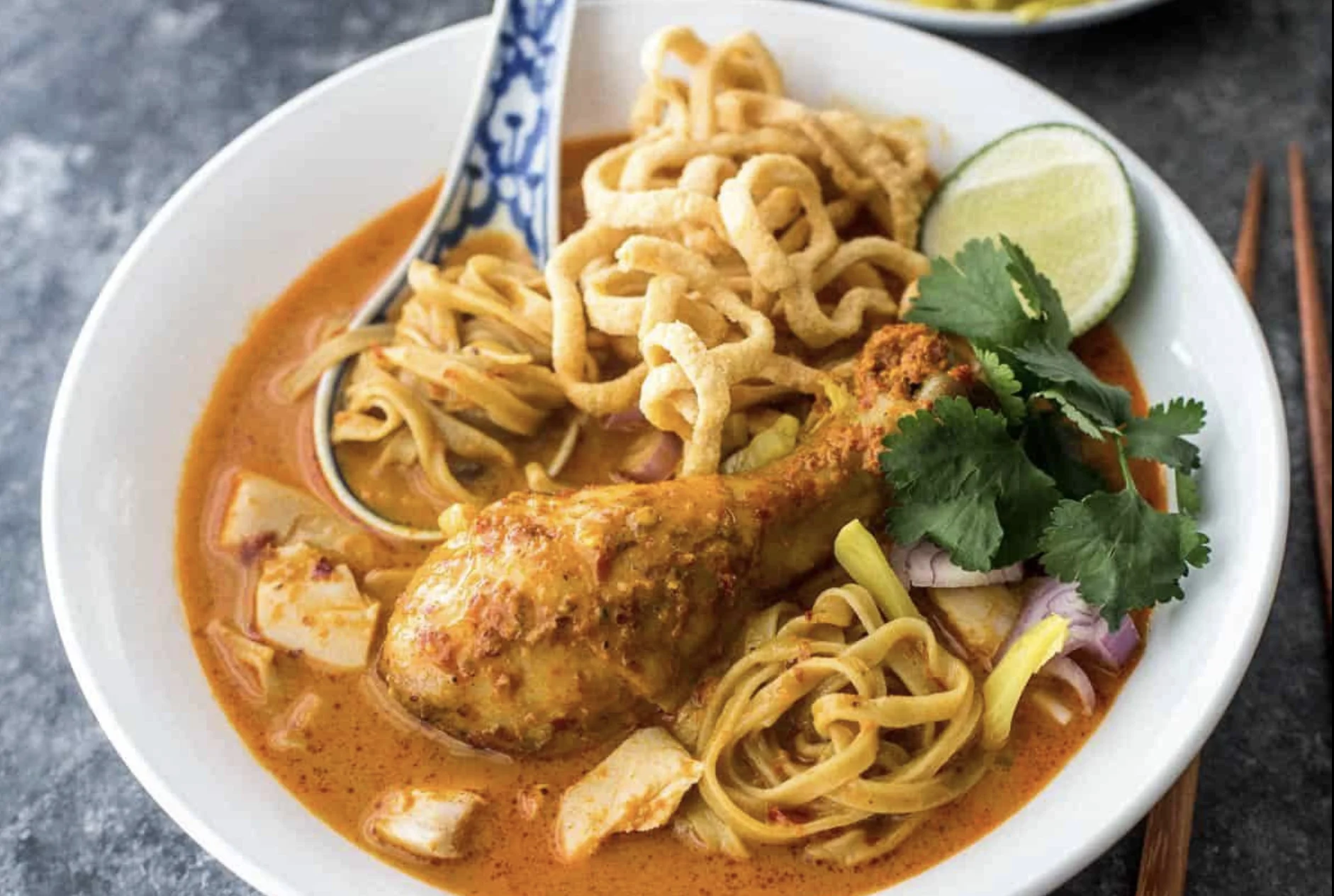
Khao soi is Chiang Mai's signature dish. It is a coconut curry broth served over egg noodles, topped with a tangle of crispy deep-fried noodles, finished with a side plate of pickled mustard greens, shallots, lime, and chili oil. The garnishes are not decorative. Squeeze the lime in, add the pickles, and stir everything together before you eat.
The broth should be rich and slightly sweet from the coconut milk, with a curry depth that builds slowly. Chicken on the bone is the most common protein, though beef is widely available. If a bowl arrives without the crispy noodles on top, something has gone wrong.
Sai Oua
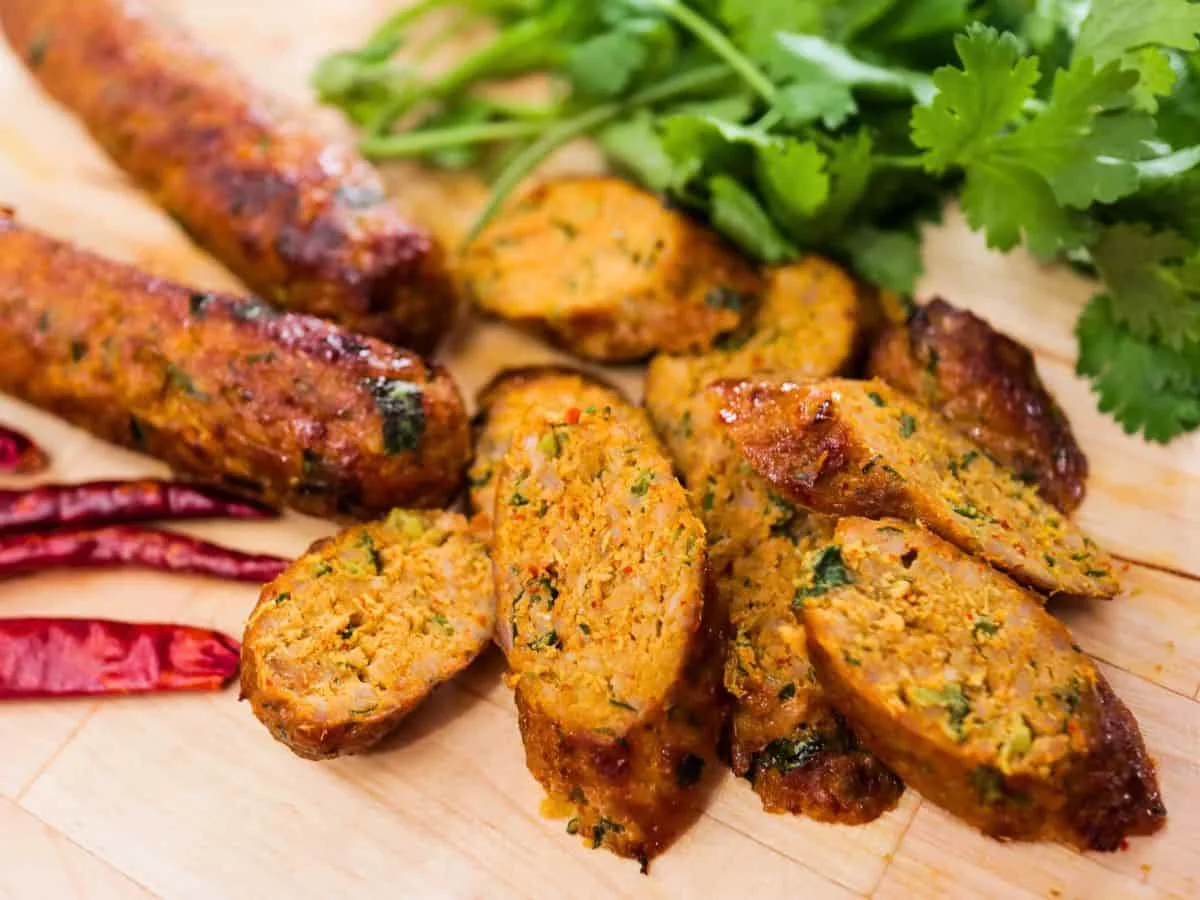
Sai oua is the Northern Thai herbed pork sausage and one of the city's most worth-eating things. The casing is packed with coarsely minced pork, fresh lemongrass, kaffir lime leaves, galangal, dried red chilis, and shrimp paste, then grilled over charcoal until the skin blisters and crisps.
The flavour is aromatic and deeply savoury, nothing like the sweet processed sausages found elsewhere in Thailand. It is sold by the link at almost every market in the city. Eat it with sticky rice and a side of nam prik noom.
Nam Prik Noom
Nam prik noom is a roasted green chili dip made by charring long green chilis, garlic, and shallots, then pounding them into a rough paste. The result is smoky, spicy, and slightly bitter. It comes with a plate of raw vegetables, blanched greens, and deep-fried pork rinds (cap moo) for dipping.
Most visitors ignore it because it looks modest on the plate. That is a mistake. Nam prik noom defines the Lanna palate in a way that khao soi does not. Eating it at a market stall with sai oua and sticky rice is one of the more honest meals you can have in this city.
Gaeng Hang Lay
Gaeng hang lay is a slow-cooked pork belly curry with Burmese roots that found its permanent home in Northern Thailand. The sauce is deep amber, built from dried spices, tamarind, ginger, and garlic. The pork belly cooks until it is nearly falling apart.
Unlike southern Thai curries, it is not served with coconut milk and it is not particularly spicy. The flavour is layered and slightly sour from the tamarind. It is a dish that takes time to make properly, and it is noticeably better in restaurants that have been cooking it for decades than in places that improvise.
Larb Meuang
Northern-style larb is a different dish to the Isaan larb most people have encountered. Larb meuang uses minced pork or pork offal, mixed with a dry spice blend of dried chilis, galangal, and long pepper, cooked rather than raw, served warm.
There is no lime juice. No fresh mint. The flavour is deeper and more complex than its Isaan counterpart. It does not appear on every tourist-facing menu because it is an acquired taste for anyone expecting the fresh, citrusy version. Order it anyway.
Khao Kha Moo
Khao kha moo is braised pork leg served over rice with a soy and five-spice broth, topped with a boiled egg and pickled mustard greens. It arrived in Chiang Mai through the city's Chinese community and became firmly embedded in local daily eating.
It is sold from carts and small shophouses across the city, usually from mid-morning through early afternoon when the pork is at its best. The broth should be dark, slightly sweet, and deeply savoury. If the cart has run out before you arrive, that is actually a good sign.
Markets worth your time
Warorot Market (Kad Luang)
Warorot is Chiang Mai's main covered market, located near the Ping River east of the moat. It opens at 4am and runs through to around 6pm, with the widest food selection available between 7 and 10am. The ground floor holds fresh produce, dried goods, and packaged Northern Thai specialties. The upper floor has a food court where vendors serve khao soi, boat noodles, and khao man gai from early morning.
Outside the building, a cluster of stalls sells sai oua by the link, nam prik noom by the bag, and cap moo stacked in columns. This is the best place in the city to buy Northern Thai pantry staples if you are renting a place with a kitchen. The cost of living guide covers typical weekly food spending in detail.
Ton Lamyai, the covered flower and food market directly adjacent to Warorot, is worth walking through. It is quieter, more local, and sells warm khao tom rice porridge from large aluminium pots in the early morning.
Chiang Mai Gate Market
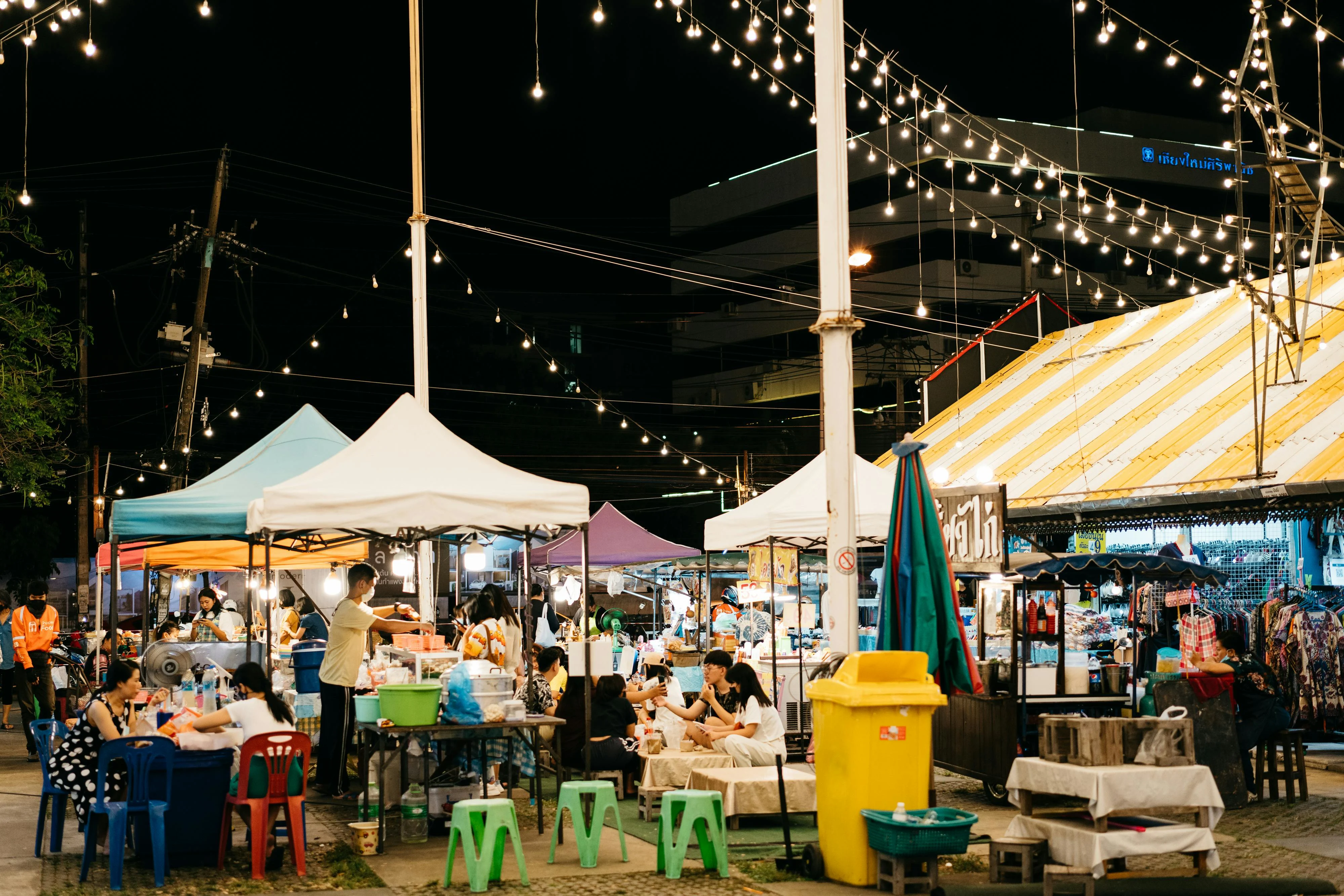
The Chiang Mai Gate market operates twice daily: a morning session from around 5am to 10am for fresh produce and breakfast, and an evening session from 5pm to 10pm for street food. The evening session is the more relevant one for most visitors.
The stalls here skew more local than the walking streets. Expect grilled meats, Northern Thai curries sold in takeaway bags, papaya salad, and vendors who have been cooking the same four dishes for years. Prices are lower here than anywhere near Nimman or the tourist stretch of the Old City.
The market sits on Bumrung Buri Road near the southern gate of the walled Old City, about a 10-minute walk from most hotels in the area.
Saturday Walking Street (Wua Lai Road)
The Saturday market runs along Wua Lai Road, just south of the Old City moat, from 5pm to midnight. It is smaller and calmer than the Sunday market, which works in its favour. Food stalls line both sides of the street alongside silver handicraft vendors.
The mix runs from Northern Thai standards to casual snacks. It is a good option for a first evening in the city when you want to eat, walk, and get a sense of the neighbourhood without committing to a sit-down restaurant. The Saturday crowd is predominantly Thai visitors and residents rather than foreign tourists.
Sunday Walking Street (Ratchadamnoen Road)
Sunday Walking Street is larger, louder, and more tourist-facing than Saturday. It runs along Ratchadamnoen Road from Tha Phae Gate into the Old City, starting around 5pm and reaching peak energy between 7 and 9pm. The market now spans multiple temple courtyards with four dedicated food court areas.
The food is good but the density of the crowd is real. Go for the scale of it, pick two or three things to eat rather than attempting to work through the full length in one pass. Khao soi, sai oua, and coconut ice cream are consistently available in versions worth eating.
Restaurants worth knowing
Huen Phen
Huen Phen is one of the longest-running Northern Thai restaurants in the city, on Ratchamanka Road in the Old City. The menu covers the full range of Lanna cuisine: gaeng hang lay, nam prik noom, larb meuang, and a khao soi that holds up against most of the city's better versions. The interior is dense with antiques and old Northern Thai objects.
Lunch is more relaxed than dinner. The restaurant gets busy in the evening, and the antique-heavy atmosphere can tip from interesting to overwhelming depending on who you are eating with. The food is the reason to go regardless of when you arrive.
Huen Muan Jai
Huen Muan Jai is a Lanna-style restaurant recognized by the Michelin Guide, set in a traditional wooden house with a garden on Ratchaphuek Alley. The menu focuses on Northern Thai cooking done with care: charred eggplant salad, fried bamboo shoots with aromatic pork, and chicken coconut soup with egg noodles. It is a quieter, more composed experience than the market circuit.
There is usually a queue at peak lunch and dinner times. The wait is real but the kitchen is consistent. Closed Wednesdays, open Thursday through Tuesday 11am to 3pm and 5pm to 9pm.
Aunt Aoy's Kitchen
Aunt Aoy's Kitchen holds a Michelin Bib Gourmand. The standout dish is a chef's omelette filled with minced pork, salted egg, and pork crackling: technically straightforward and completely satisfying. The space is small, personal, and covered in handwritten notes from previous customers.
It is not a tourist-facing restaurant in the way some Michelin-listed spots in the city have become. The menu stays close to what Aoy has always cooked, which is the reason people keep coming back.
Where to eat by neighbourhood
Old City
The Old City holds the highest concentration of traditional Northern Thai restaurants in the city. Huen Phen and several similar spots operate within the moat, and the evening Chiang Mai Gate market is a 10-minute walk from most Old City hotels. The drawback: the closer you are to Tha Phae Gate and the main tourist roads, the more the menus drift toward pad thai and spring rolls. Walk one soi inward from the main roads and both the food quality and the prices improve immediately.
Nimman
Nimman's food scene runs heavily toward cafes, brunch spots, and international restaurants. That is not a complaint. It is one of the better areas in Southeast Asia to eat Korean, Japanese, or modern Thai food in a comfortable setting. For traditional Northern Thai food, you will need to travel. The neighbourhood guide covers what Nimman offers for longer stays and who it suits best.
Santitham
Santitham, north of the Old City moat, is where Chiang Mai residents actually eat on weekday evenings. There is a cluster of local restaurants and market stalls along Chang Phuak Road, including a well-known braised pork leg cart near Chang Phuak Gate that operates from early evening until the food runs out. Prices in Santitham are consistently lower than Old City or Nimman, and the neighbourhood has almost no tourist infrastructure, which is exactly the point.
Riverside
The riverside area along the Ping River sits between the tourist restaurant strip and older local shophouses. Warorot and Ton Lamyai markets are on this side of the city, which makes it a good base for morning market eating. The restaurants along the river itself are fine but rarely the best version of anything. The location carries most of them.
Practical notes
The best months to eat outdoors in Chiang Mai are October through February. Evenings are cool, walking markets are comfortable, and the whole city is more pleasant to navigate on foot. The burning season runs from mid-January through March, with air quality at its worst in March. If you are visiting during that period, the burning season guide covers what to expect and how to plan around it.
Most local restaurants and market stalls do not take cards. Bring cash. The ATMs near Warorot and around the Old City work reliably, though foreign card withdrawal fees apply. Northern Thai food is generally less spicy than central or southern Thai food, but nam prik noom and larb meuang carry real heat. Ask for mai phet (not spicy) at any restaurant in the city and you will be understood.
If you are eating your way through the city on a longer stay, the cost of living guide has a realistic breakdown of monthly food spending across different eating habits.
Where to go from here
Eating well in Chiang Mai is straightforward once you know what to look for and, more importantly, what to ignore. The city rewards people who move past the tourist menus and spend time near the markets and local neighbourhoods.
For a longer stay, renting an apartment in Chiang Mai covers what to expect from the rental market and which areas make the most sense depending on your priorities. For where to sleep before you commit to something longer, the hotel guide covers the best options across all budgets. And if you are working while you are here, the coworking guide has the city's best spaces by neighbourhood.