LTR Visa vs Thailand Privilege Card: The Real Cost Comparison
Both the LTR Visa and the Thailand Privilege Card solve the same problem: staying in Thailand long-term without annual renewals or repeated visa runs. They approach it differently. The LTR requires proving income but costs far less upfront. The Privilege Card needs no income proof, but the purchase price is substantially higher.
Most comparisons stop at the headline numbers. This one covers the income thresholds, the 90-day reporting obligations, and the tax math that changes the LTR's value significantly for higher earners. The documentation risk that catches people off guard at renewal is worth understanding before committing to either path.
Cost Comparison
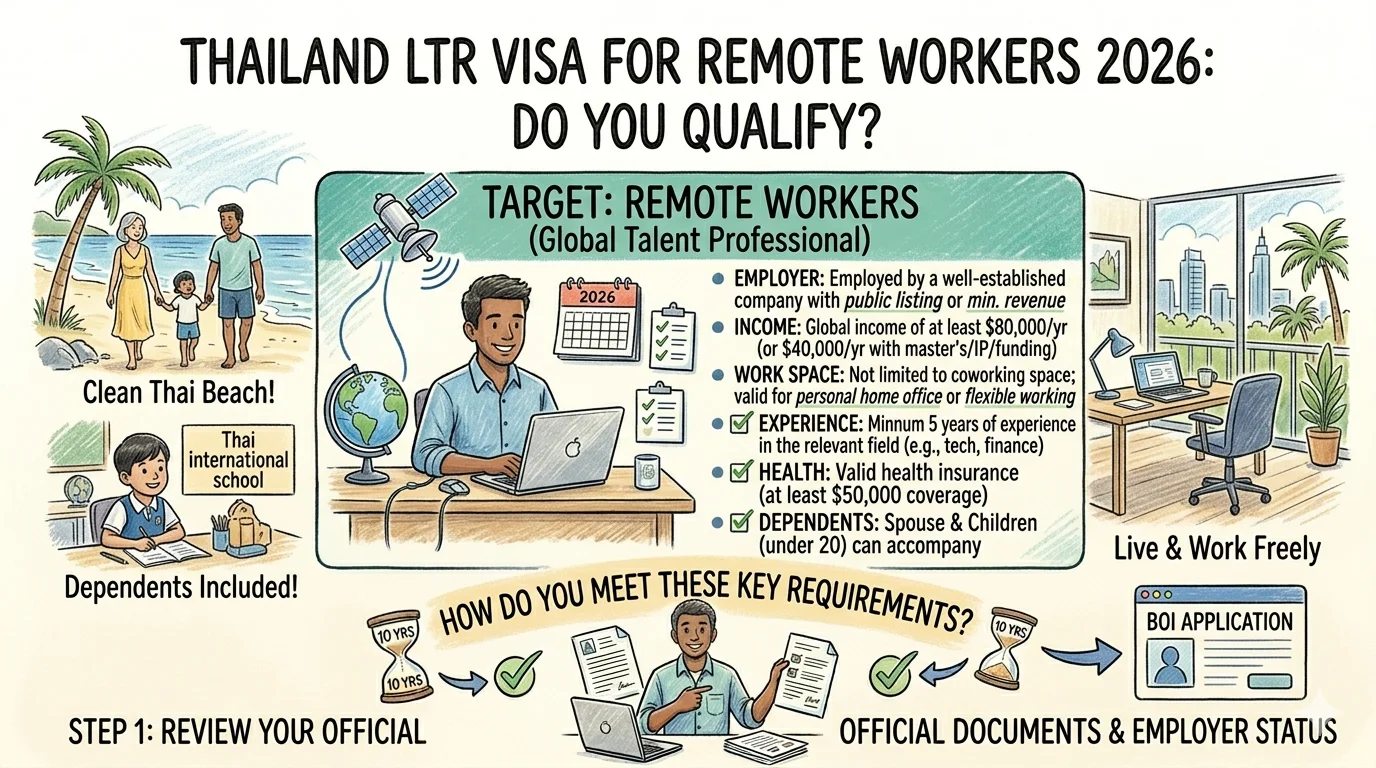
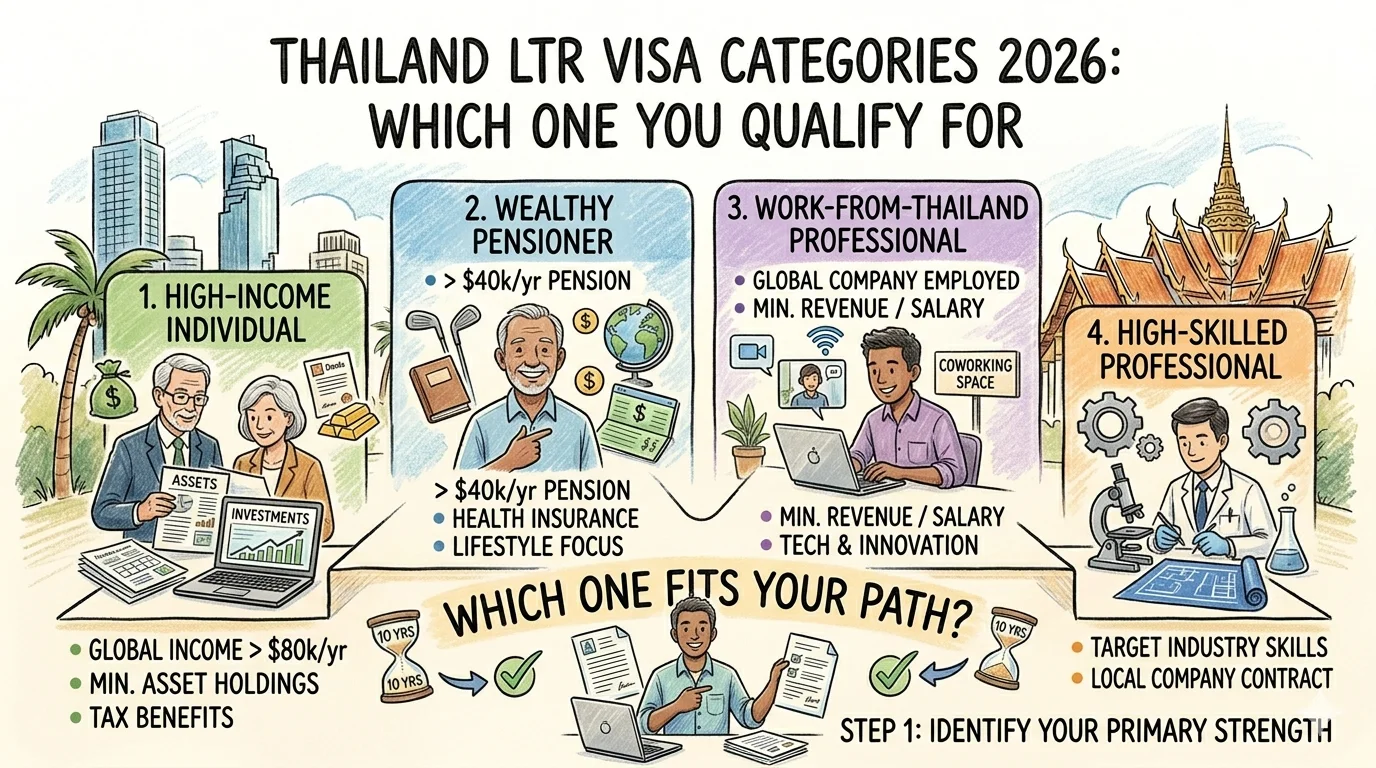
The LTR Remote Worker category costs 500 USD at application plus 50,000 baht on approval, roughly 67,000 baht total. The Wealthy Pensioner category carries the same fees. The Wealthy Global Citizen category sits in a different bracket entirely at 50,000 USD upfront.
The Thailand Privilege Card was rebranded from Thailand Elite in late 2023 and restructured its tiers. The current lineup runs from Bronze at 650,000 baht for 5 years through to Reserve at 5,000,000 baht for 20 years. The Bronze Card application window has been extended to September 30, 2026, but confirm availability before applying as it is a promotional tier. Bangkok PostSiam Legal International
Visa Type | Upfront Cost | Stay | Income Required |
|---|---|---|---|
LTR (Remote Worker) | ~67,000 baht | 10 years | $80,000 USD/year |
LTR (Wealthy Pensioner) | ~67,000 baht | 10 years | $80,000 USD/year passive, or $40,000 + $250k Thai assets |
LTR (Wealthy Global Citizen) | ~$50,000 USD | 10 years | None (since 2025) |
Privilege Bronze | 650,000 baht | 5 years | None |
Privilege Gold | 900,000 baht | 5 years | None |
Privilege Platinum | 1,500,000 baht | 10 years | None |
Privilege Diamond | 2,500,000 baht | 15 years | None |
Privilege Reserve | 5,000,000 baht | 20 years | None |
Income Documentation: The Key Difference
The LTR requires proving ongoing income at the time of application and reconfirming it annually. If your income drops below the threshold at renewal, you cannot renew in the same category. That is a real risk for freelancers with variable income, retirees whose pension currency has depreciated, or remote workers who change employers mid-visa.
The Wealthy Pensioner category offers a partial workaround. Applicants earning between 40,000 and 80,000 USD per year can still qualify by supplementing their application with a Thai investment of at least 250,000 USD. That gives retirees with investment portfolios more flexibility than the headline threshold suggests.
The Privilege Card has no income requirement at any stage. Once purchased, the card is valid for its full period regardless of what happens to your finances. That makes it the cleaner path for people with savings but income that is irregular or hard to document formally.
Benefits Beyond the Stay
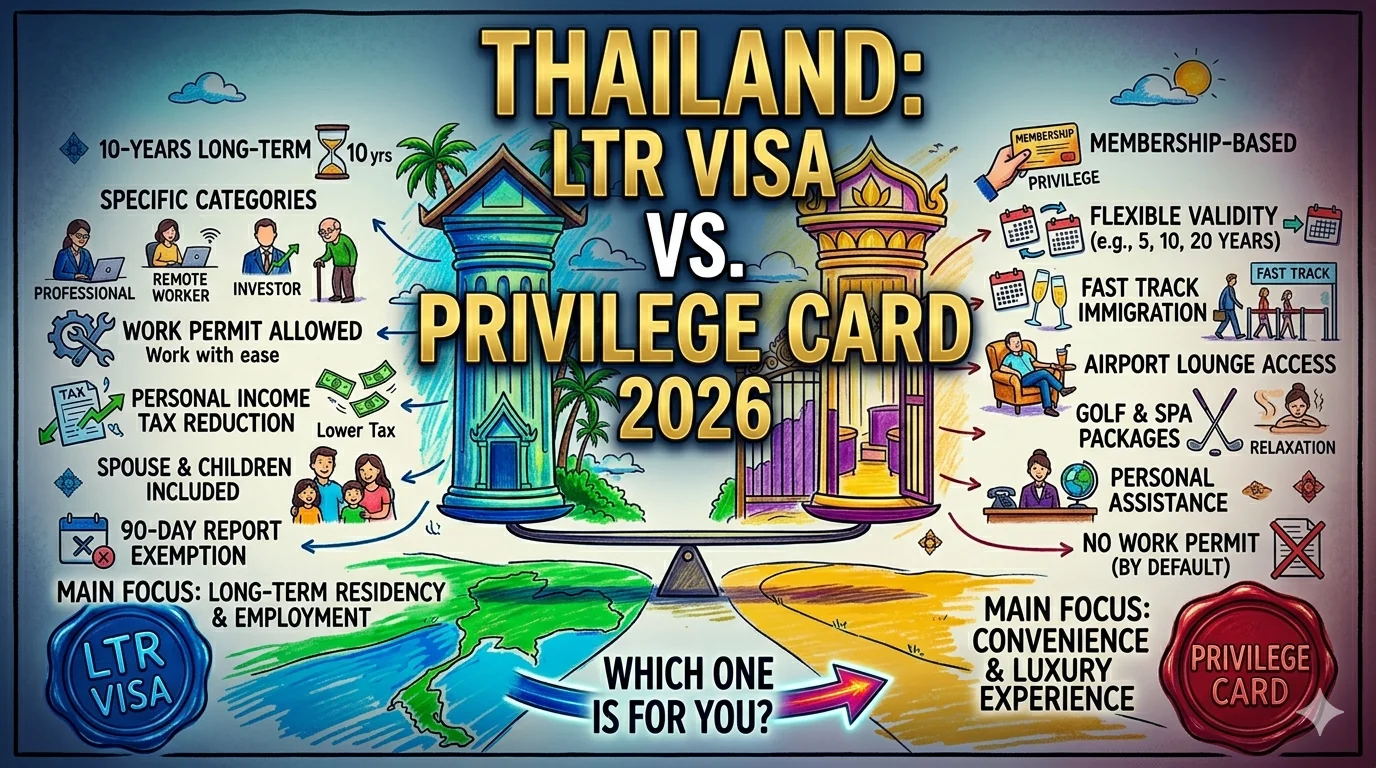
The LTR includes a streamlined work permit for highly skilled professionals employed by non-Thai companies, a flat 17 percent personal income tax rate for qualified applicants, and a duty exemption on one vehicle imported from abroad. The LTR carries no minimum stay requirement, so holders can travel freely without risking their status, and same-sex spouses have been recognised as eligible dependents since 2025. Up to four dependents can join on the same visa.
The Privilege Card includes dedicated fast-track immigration lanes at major airports, a personal concierge service, and access to Thailand Elite lounges. It carries no work permit, no tax exemption, and no additional property rights.
The tax benefit is where the LTR's value compounds for high earners remitting income to Thailand. Thailand's standard progressive income tax rate reaches 35 percent. A remote worker earning 80,000 USD per year who remits most of it could save more than the total visa cost over 10 years through the 17 percent flat rate alone.
90-Day Reporting
LTR holders are exempt from the standard 90-day address report. Instead, they report to Thai immigration once a year through an annual online check-in, confirming contact information and insurance status. Privilege Card holders must complete the standard 90-day report like any other non-immigrant visa holder.
That difference compounds over time. Over a 10-year LTR stay, you avoid roughly 40 reporting cycles. Over a 5-year Privilege Card stay, you file 20 reports, which the card's concierge service can assist with but cannot waive.
Which One to Choose
The LTR makes more sense if your income is clearly documentable, meets the threshold comfortably, and you stand to benefit from the tax cap or work permit. The Privilege Card makes more sense if your income is irregular, below the LTR threshold, or hard to document formally. It also suits anyone who wants to skip the annual income reconfirmation and values the airport fast-track service.
Start with the per-year cost. The LTR works out to roughly 6,700 baht per year over a 10-year stay. Even the most affordable Privilege tier, Bronze, costs 130,000 baht per year. That is nearly 20 times more annually. If you can document 80,000 USD per year in foreign income and are genuinely committing to Thailand long-term, the LTR is not a close call on cost.
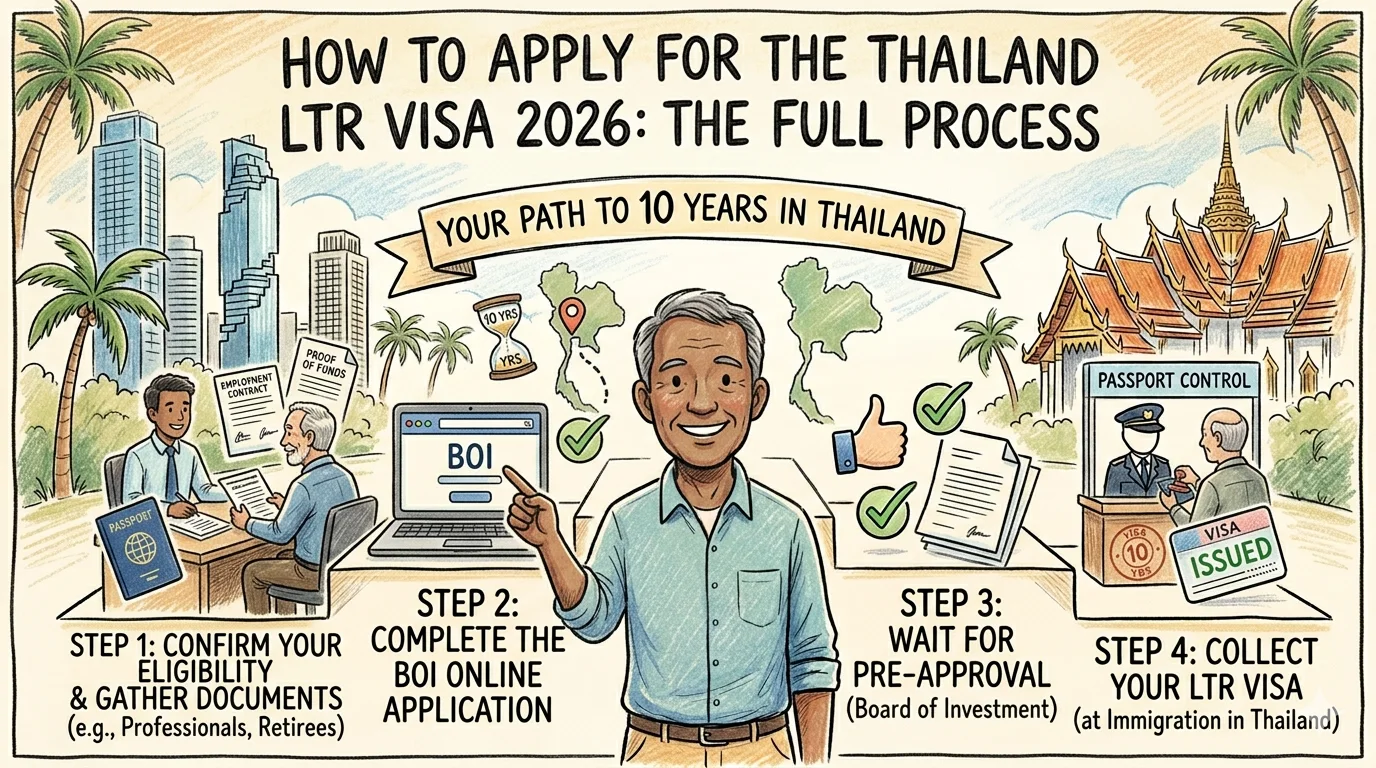
Processing runs 4 to 8 weeks for the LTR from a complete application. The Privilege Card typically moves faster, with payment due within 60 days of approval. Both are one-time processes rather than annual exercises.
Both are legitimate long-term solutions. The right choice depends on your financial situation, not on which visa sounds more official.
Where to Go from Here
For the full application process, read how to apply for the LTR visa step by step. For Privilege Card tier pricing and what each level includes, see Thailand Privilege Card 2026 tiers. Pensioners over 50 should also read the Non-OA vs Non-O retirement visa comparison before deciding.