Food is the most controllable line item in any Thailand budget. Eating local Thai food keeps costs extraordinarily low. Adding Western restaurants, imported groceries, and daily alcohol pushes the monthly figure up fast. The difference between Scenario A and Scenario C below is not quality of life — it is mostly habit.
Monthly food budget at a glance
Scenario | Monthly cost | What it covers |
|---|---|---|
🍜 Local food only | 5,000 to 8,000 baht | Street stalls, food courts, no imported groceries |
🍽️ Mixed (most expats) | 9,000 to 14,000 baht | Home breakfast, local lunch, rotating Thai and mid-range dinner |
🥩 Western-leaning | 15,000 to 25,000 baht | International restaurants, imported groceries, weekend brunch |
Local Thai food
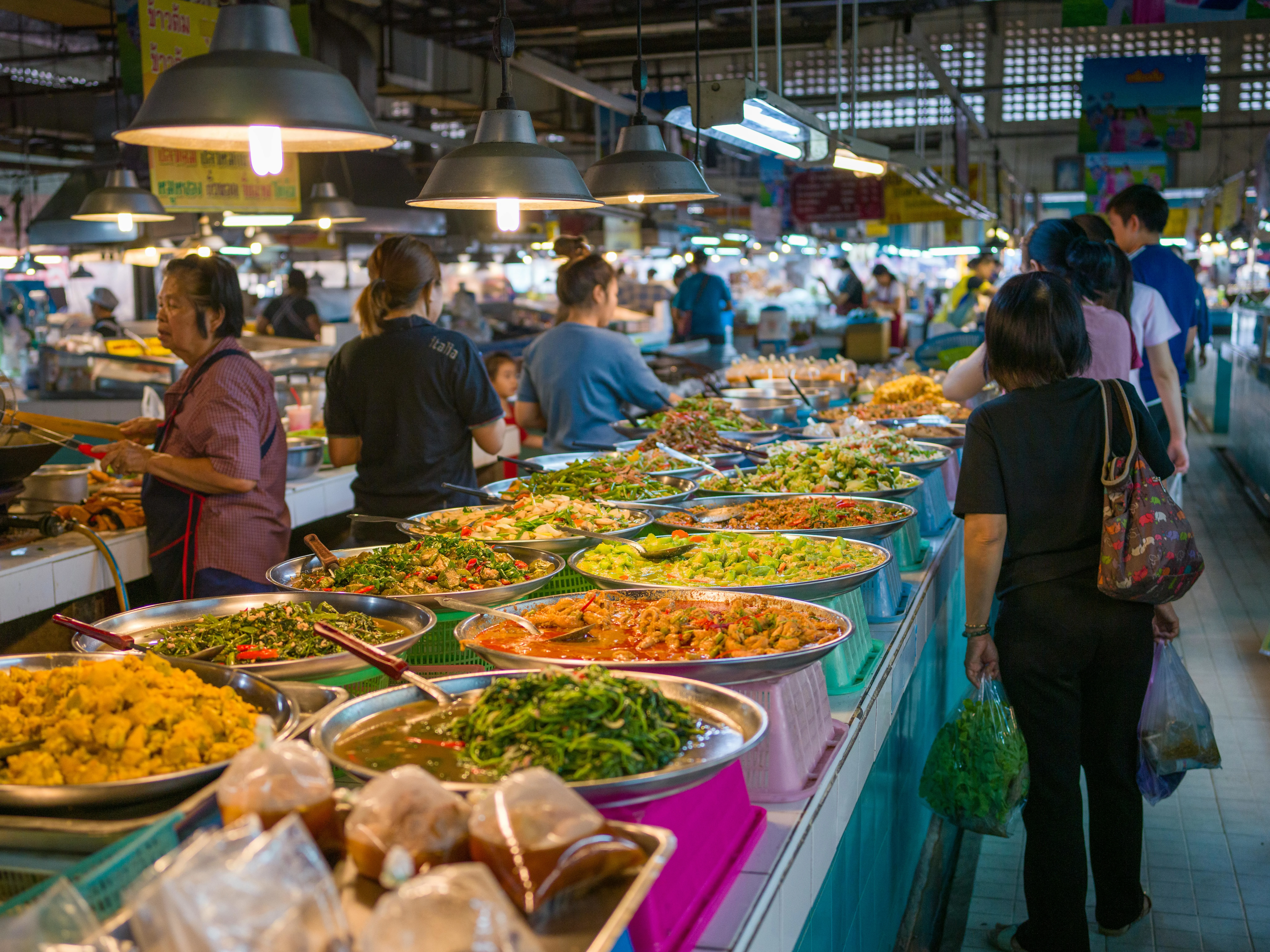
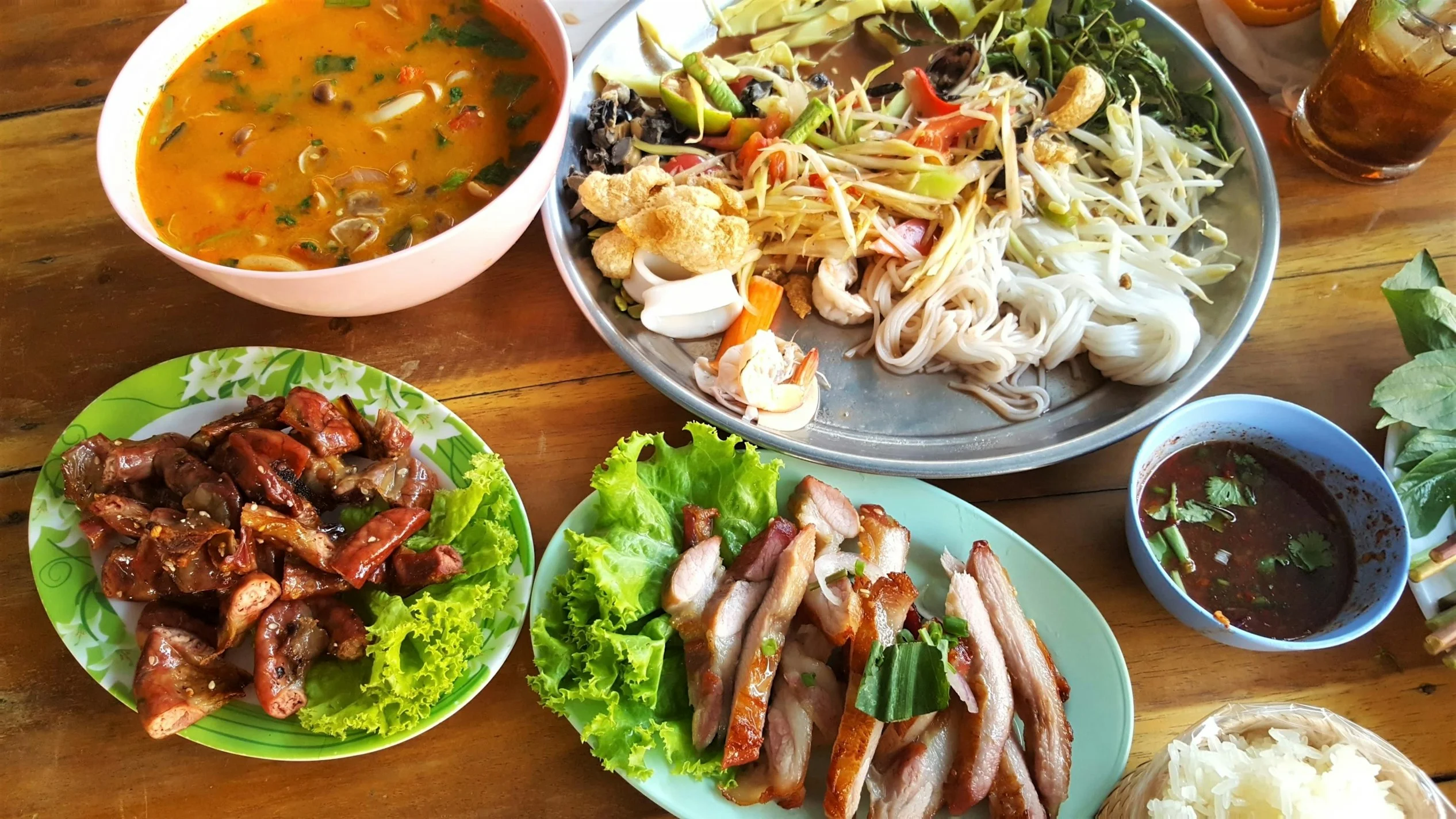
The cheapest and often best eating in Thailand is at local restaurants, food courts, and market stalls. A full plate of rice with meat and vegetables (khao rad gaeng) costs 50 to 80 baht. A bowl of noodle soup runs 60 to 100 baht. Pad Thai at a street stall is 60 to 80 baht. These prices apply in most cities and do not change significantly with the season.
Food courts inside shopping malls are a step up in comfort with air conditioning and the same price range. The Central and Big C food courts in major cities are reliable options for a clean environment at local prices. University area food courts and government office canteens are the cheapest eating in any city, sometimes as low as 30 to 50 baht per dish.
Local fresh markets
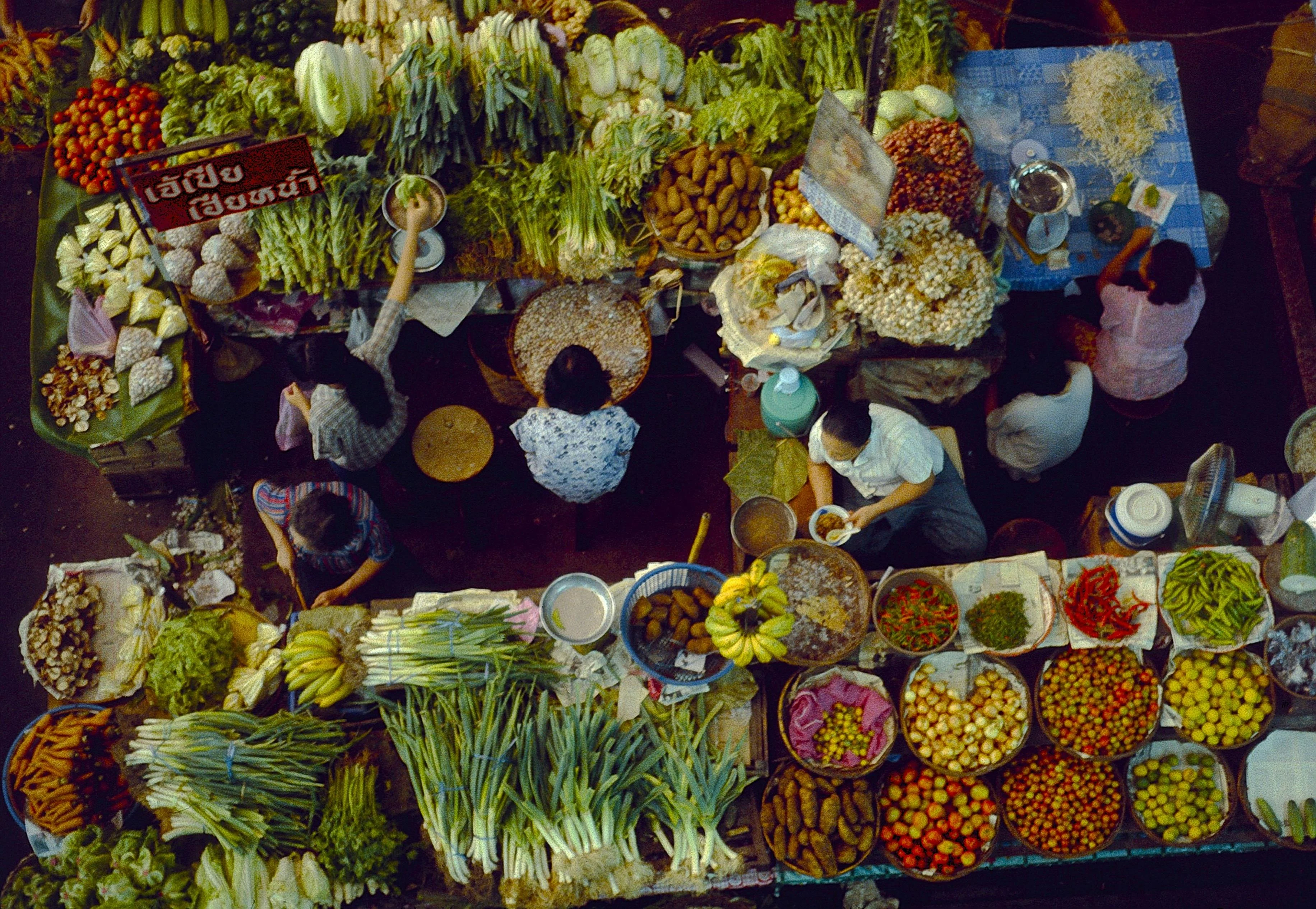
Wet markets open early (5am to 11am) and sell fresh produce, meat, and eggs at wholesale-adjacent prices. A week of vegetables and protein for one person costs 400 to 700 baht from a market. The quality is fresher than supermarket produce and the selection is wider for Thai ingredients.
Most neighbourhoods have a morning market within walking distance. Learning to navigate one with basic pointing and a calculator is worthwhile for anyone staying more than a month. Vendors in expat areas are accustomed to the interaction and will accommodate it.
7-Eleven and convenience stores
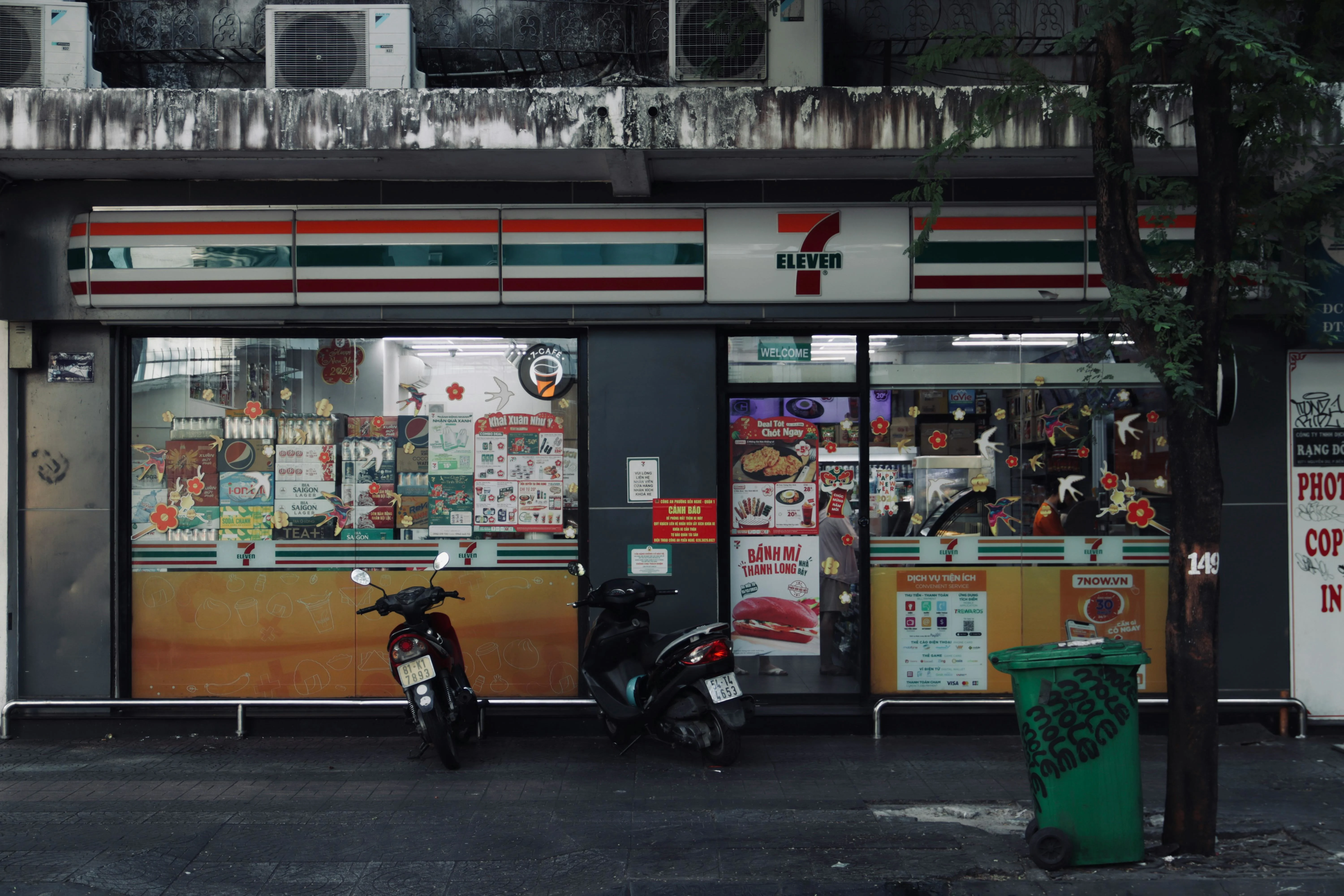
7-Eleven is ubiquitous in Thailand and serves a specific function: cheap prepared food at any hour. Sandwiches, rice meals, and pastries run 25 to 60 baht. The quality is adequate rather than good. 7-Eleven coffee is 25 to 40 baht and is genuinely decent by convenience store standards. It is not a daily food strategy but it is useful for late nights and early mornings.
Mid-range Thai restaurants
Sit-down Thai restaurants with menus and table service charge 120 to 300 baht per dish. A meal for two with drinks runs 400 to 700 baht. These restaurants serve the same dishes as street stalls but in more comfortable settings with consistent quality. For daily eating over a long stay, this is a common middle ground for people who want air conditioning but do not want tourist restaurant prices.
Supermarkets and international groceries
Supermarket | Best for | Weekly shop (1 person) |
|---|---|---|
Tesco Lotus / Big C | Thai staples, household basics | 800 to 1,200 baht |
Tops Supermarket | Mid-range imported goods | 1,200 to 2,000 baht |
Villa Market / Gourmet Market | Western imports, cheese, wine | 2,000 to 4,000 baht |
European cheese runs 150 to 350 baht per 200g. Imported wine costs 400 to 1,200 baht per bottle. Western breakfast cereals run 200 to 400 baht per box. These prices are not dramatically higher than import-equivalent prices in Europe, but they add up quickly if imported products become daily staples.
Western restaurants
A proper sit-down Western meal in a mid-range restaurant runs 250 to 500 baht for a main dish. Steak restaurants, Italian, and international cuisine are available in Bangkok, Chiang Mai, and Phuket with mains from 350 to 800 baht. Fine dining with wine starts around 2,000 baht per person.
Building a realistic food budget
A practical food budget depends heavily on how often you cook versus eat out. Three meals per day at local Thai restaurants costs 300 to 500 baht in Chiang Mai and 400 to 600 baht in Bangkok. Home cooking from fresh markets costs 100 to 200 baht per person per day for Thai-style meals. The crossover point where cooking becomes cheaper than eating out is around two meals per day at mid-range restaurants.
Western breakfast habits are the biggest cost multiplier. A bowl of Thai noodles for breakfast costs 50 baht. A Western breakfast at a cafe costs 150 to 300 baht. Switching to Thai breakfast most days and reserving the Western cafe visit for weekends reduces food costs by 2,000 to 4,000 baht per month without meaningful sacrifice in food quality.
Alcohol is an often-underestimated budget item. Imported wine costs 500 to 1,500 baht per bottle. Thai beer (Chang, Singha, Leo) costs 50 to 80 baht at a 7-Eleven and 100 to 200 baht at a restaurant. Daily drinking adds 3,000 to 8,000 baht per month to a food budget. Expats who reduce alcohol consumption often find Thailand dramatically cheaper than their pre-move lifestyle regardless of base food costs.
Where to go from here
Food is one part of the monthly picture. These guides cover the rest.
For the full monthly budget: the cost of living in Thailand guide covers rent, transport, utilities, and food together at three spending levels across every major expat city.
For city-specific food costs: the Bangkok food guide and the Chiang Mai food guide cover where to eat well at every price point in each city.
For the city decision: the best cities to live in Thailand guide covers how food costs vary across Bangkok, Chiang Mai, Phuket, and Hua Hin as part of the broader cost comparison.