Thai Food Guide: What Locals Actually Eat in Thailand
The pad thai and green curry most people know from home represent a small corner of a much wider regional cuisine. The food Thais eat day to day at street stalls and shophouses covers a range of dishes that rarely appear on tourist menus, varies dramatically by region, and costs a fraction of what tourist restaurants charge for a simplified version of the same thing.
This guide covers the dishes worth finding, the regional differences that matter, and how to order in places that do not have English menus.
The Dishes on Every Tourist Menu (And What They Actually Taste Like Here)
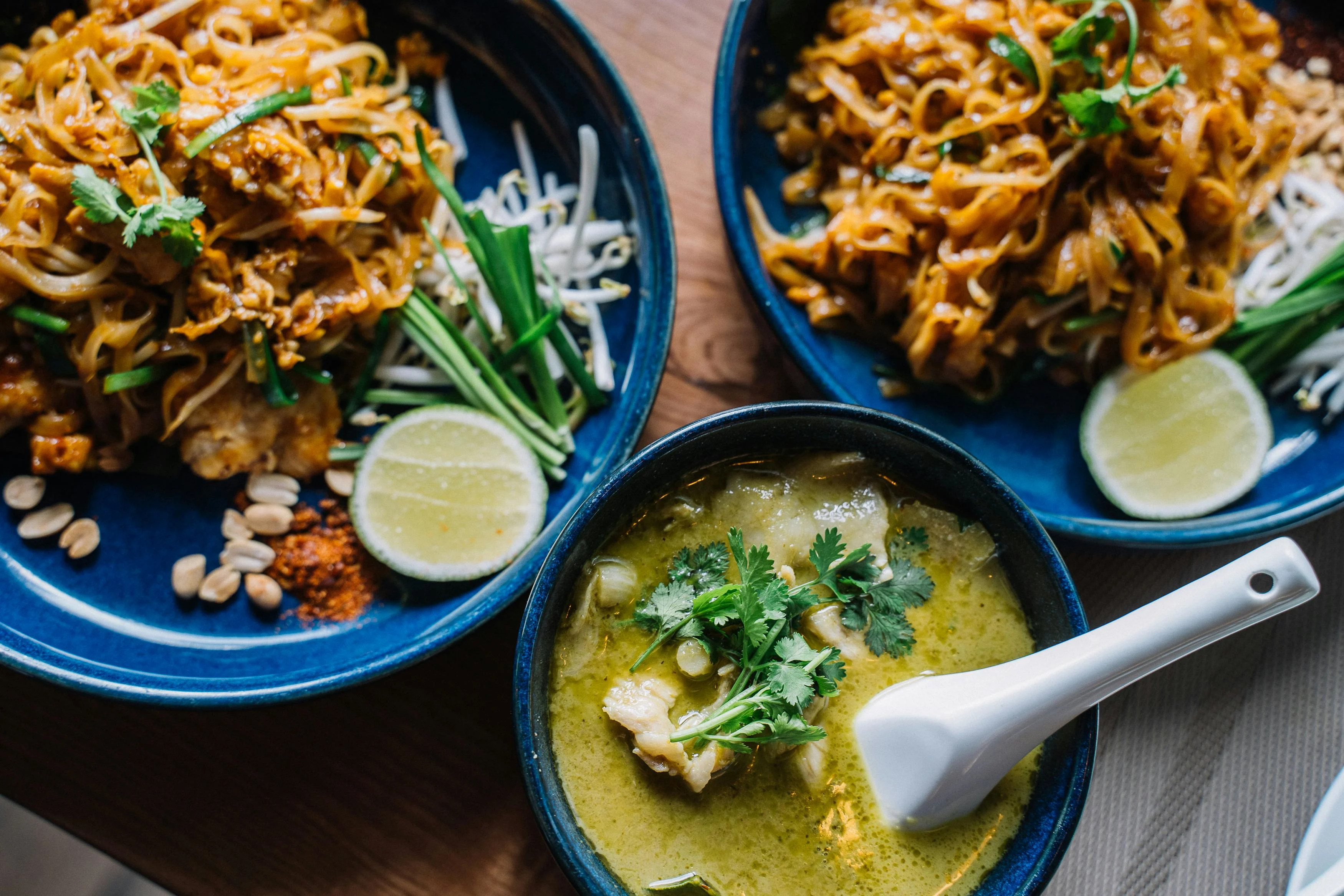
Pad thai in Thailand uses thin rice noodles, is cooked fast over high heat until slightly charred, and arrives with raw bean sprouts, a wedge of lime, ground chilli, and fish sauce for seasoning at the table. There is no thick noodle and peanut sauce situation. The difference between a good pad thai from a busy street stall and a tourist restaurant version is not small.
Green curry (gaeng khiao wan) is made with fresh green chillies, coconut milk, fish sauce, and palm sugar. The balance hits sweet, sour, salty, and hot at the same time. Most versions served outside Thailand are too mild and too sweet. A good Thai kitchen serves it with jasmine rice, not noodles.
Tom yum goong should have galangal, lemongrass, and kaffir lime leaves visible in the broth. The chilli heat is present but not the point. The broth should taste sour and fragrant first, hot second.
Dishes Worth Finding That Do Not Appear on Tourist Menus
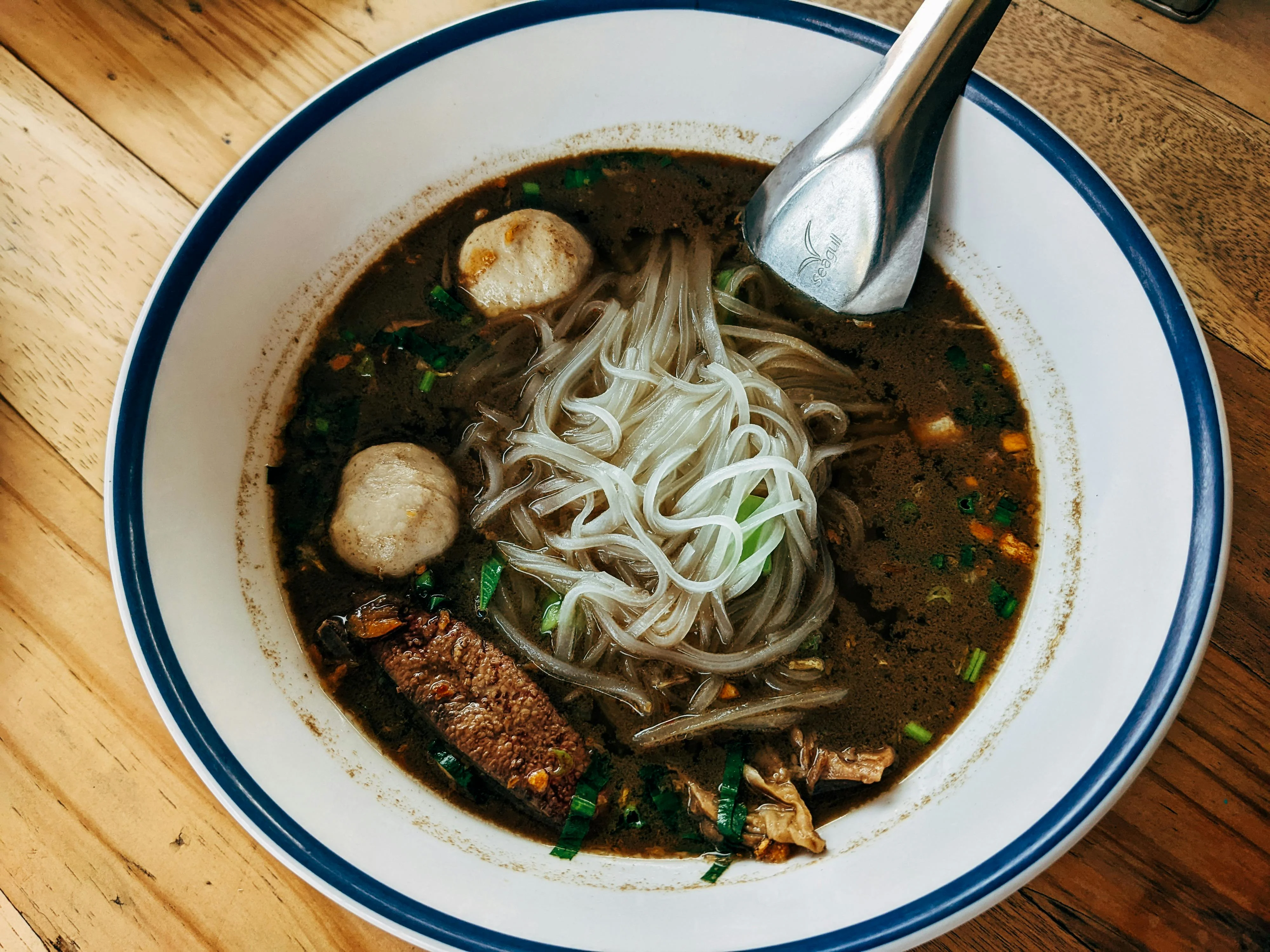
Boat noodles (kuay teow rua) are small bowls of pork or beef noodle soup with dark, intensely flavoured broth, cooked blood, and liver. They originated on the canal boats of central Thailand and cost 15 to 25 baht per bowl. You eat several rather than one, which is the correct approach.
The boat noodle street near Victory Monument in Bangkok is the most accessible concentration of this dish outside its canal origins. Order four bowls before you decide if you like it.
Som tam varies dramatically by region. The Bangkok version is relatively mild with peanuts and dried shrimp. The Isaan version (som tam lao) uses fermented fish paste (pla ra) and runs significantly hotter and funkier. If you ask for "not spicy" in Isaan, recalibrate your expectations before the bowl arrives.
Khao man gai is poached chicken served over rice cooked in the chicken broth, with a small bowl of broth on the side and a thick sauce made from fermented soybeans, chilli, and ginger. It costs 50 to 80 baht at a dedicated stall and is one of the better hangover foods in the country.
Regional Differences That Matter
Region | Flavour Profile | Signature Dishes | Spice Level |
|---|---|---|---|
Central (Bangkok) | Balanced, coconut-forward | Pad thai, green curry, tom yum | Medium |
Northern (Chiang Mai) | Milder, pork-forward, fermented | Khao soi, sai ua sausage, nam prik noom | Medium to mild |
Isaan (Northeast) | Sour, funky, intensely spicy | Som tam lao, larb, grilled meats | Very high |
Southern | Heavily spiced, turmeric and curry forward | Gaeng tai pla, massaman curry, roti | Very high |
The north and the south are cooking completely different food. A first-time visitor who spends a week in Bangkok and a week in Chiang Mai is eating two distinct regional cuisines. Plan around that if food is a priority.
Khao Soi: The Dish That Changes People's Minds About Thai Food
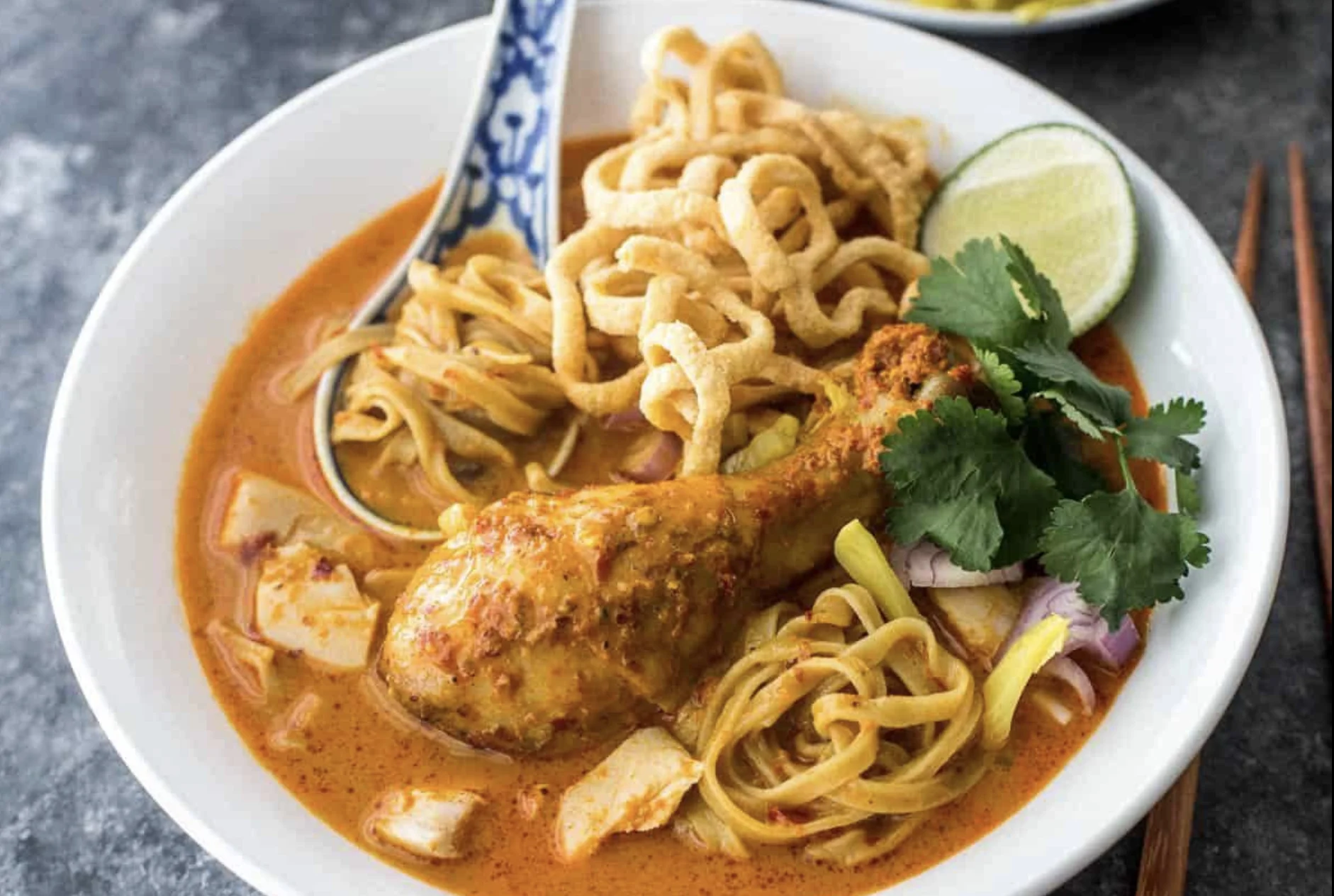
Khao soi is a Northern Thai curry noodle soup made with egg noodles, coconut milk, and a curry paste that pulls from Burmese and Yunnanese cooking traditions. It arrives with crispy fried noodles on top, a wedge of lime, pickled mustard greens, and a small bowl of chilli oil on the side. It does not taste like anything from the south.
The best khao soi in Chiang Mai comes from shophouses and market stalls, not tourist restaurants. Khao Soi Khun Yai on Charoen Prathet Road is one of the most consistently cited spots, but any busy local stall is worth trying. A bowl costs 60 to 90 baht.
If Chiang Mai is on the itinerary, check the best time to visit Thailand first. The burning season from February through April affects air quality across the North.
Where to Eat: The Hierarchy That Actually Matters
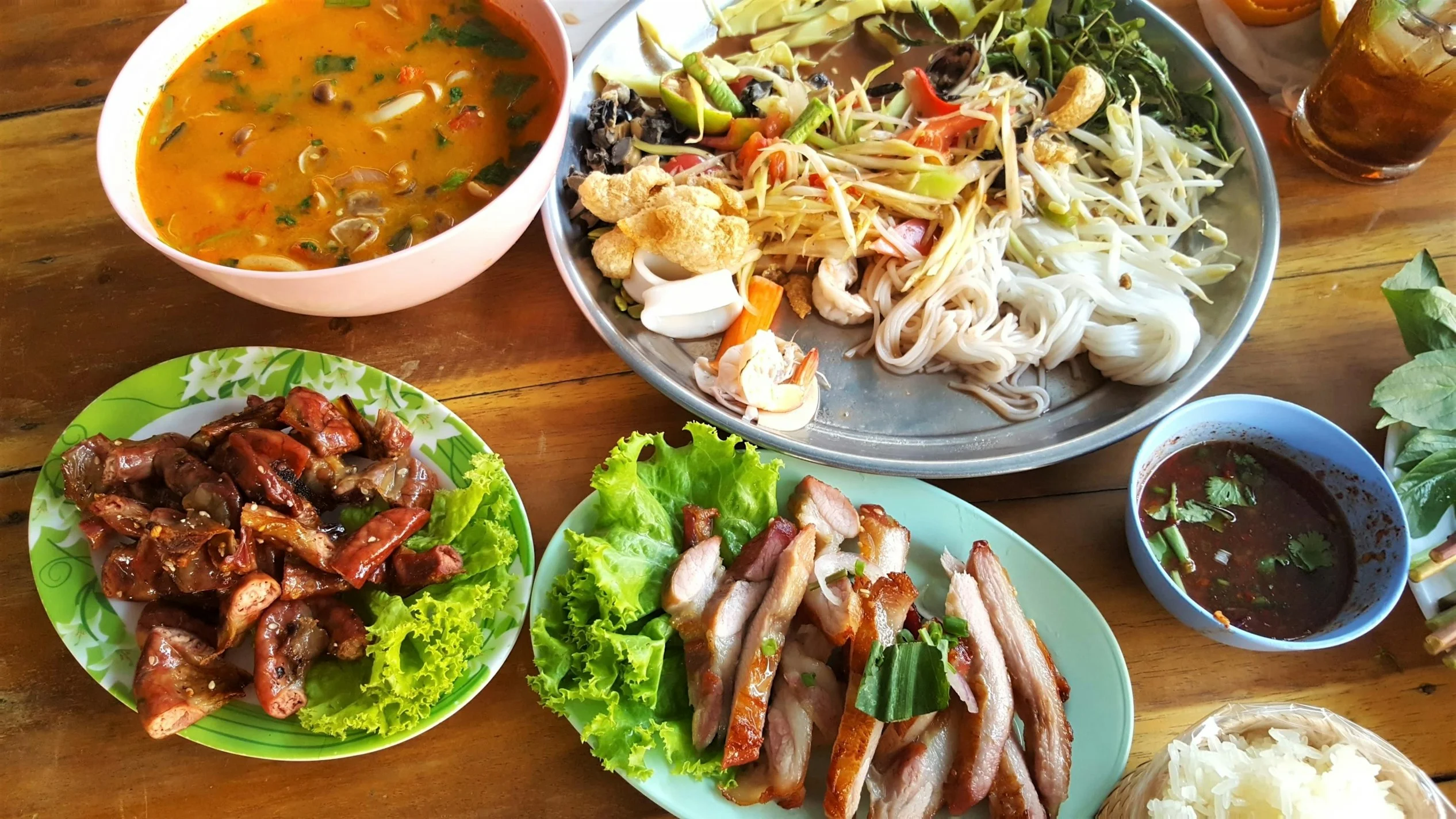
Street stalls (raan arhan tam sang) are the most reliable for quality and freshness. A busy stall cooking the same 3 to 5 dishes all day for a loyal local clientele will outperform a tourist restaurant with a 60-item menu almost every time. Look for plastic stools, a handwritten menu, and a queue.
Shophouse restaurants (raan khao kaeng) serve pre-cooked curries and stir-fries over rice. Point at what you want, it goes over rice, you pay 50 to 80 baht. These are where Bangkok's office workers eat lunch and the food is at its best between 11am and 1pm before the best dishes run out.
Night markets run in most Thai cities from around 5pm. Chiang Mai's Saturday and Sunday Walking Street, Phuket's Old Town market, and Bangkok's Or Tor Kor all have strong food. Avoid the tourist-facing night markets near major sights. The prices are higher, the menus are simplified, and the clientele tells you everything you need to know.
How to Order Without an English Menu
Point and smile works at most stalls. "Nee krap" (male) or "nee ka" (female) while pointing is a complete sentence. A few phrases cover most situations: "pet nit noi" means a little spicy, "mai pet" means not spicy, and "aroy mak" means very delicious and will make the cook's day regardless of what language you say it in.
Google Translate's camera function translates Thai menus in real time. Hold it up and the translation overlays on the image. It is not precise but it converts Thai script into something workable in seconds. Download the Thai language pack before you arrive so it works offline.
What Thai Food Actually Costs
A dish at a street stall costs 50 to 100 baht. A bowl of noodles at a local shop runs 60 to 80 baht. A sit-down Thai restaurant aimed at locals costs 120 to 250 baht per person with rice and a drink. Tourist restaurant versions of the same dishes run 200 to 500 baht.
The price gap is not always a quality gap. Many tourist restaurants are good. But the street stall pad thai at 60 baht and the tourist restaurant version at 250 baht are often cooked by people with equivalent skill. The difference is rent, air conditioning, and the English menu.
Where to Go from Here
The first trip to Thailand guide covers how to get around, what things cost beyond food, and what to sort before you land. For first-timers unsure where to start with destinations, Thailand for beginners covers the 10 things that catch most people off guard. The full destination and city breakdown is on the Thailand travel guide.